Showing posts with label Jana Segal. Show all posts

Saturday, July 11, 2020

Desert Victory Gardens


Inspired by empty grocery shelves and too much free time from sheltering in place, people rushed off to Home Depot to empty the shelves of gardening supplies. Many started their own "victory gardens." 

For you young'uns out there…Victory Gardens were made popular during WWII when people planted vegetable gardens to supplement their meager rations. The government promoted victory gardens as a way to support the war effort. They even offered a booklet to help first time gardeners. 

A peek at that booklet might be helpful.


1. Don’t start what you can’t finish. Before you start a garden, count the work involved even before seedtime and through to harvest. Abandoned gardens are a waste of seed, fertilizer, tools, insecticides and labor. 

Great advice. Wait! No mention of water? The writers obviously weren’t living in the desert during a 20 year drought and record heat wave!


When I think of Victory Gardens I think of my nana’s garden with perfect rows of vegetables. But nana lived on a farm in the Midwest where there was plenty of water. The gardeners of that age weren’t concerned about pollinators going extinct due to insecticides. They were blissfully unaware of the impact of climate change or fertilizer made out of fossil fuels. 


Check out number 7. Don’t let the pole beans block out the beets. In fact, don’t let any of the tall crops shade short ones whatever they are. Growing things must get sun. 

What!? They obviously haven’t watched their veggies wither and die in the scorching June sun. But I’m afraid many first time desert gardeners might.

There are lessons to be learned in the desert all around us.


Baby saguaros survive the harsh summer by sheltering in the shade of native trees like a mesquite or palo verde. They don’t call these trees “nurse plants” for nothin’. Our garden is shaded by two palo verde trees. Veggies grown under mesquite and palo verde trees also benefit from the nitrogen those trees fix in the soil. As far as those pole beans go, the Tohono O'odham demonstrate how the three sisters (beans, squash and corn) benefit from being grown together. The beans climb the corn and fix nitrogen in the ground, and squash leaves cover the ground to protect the soil and keep down weeds. After soaking beans for dinner, I'll plant a few under my young fruit trees for a nitrogen boost.   


Unfortunately, the giant eucalyptus tree that used to shade our entire backyard died this year. Now our baby fig trees suffer from direct sunlight. Taking advice from experienced Tucson gardeners, I've concocted shade contraptions out of tomato cages and some recycled shade mesh. No need to shade or water our native trees. Our desert hackberry, acacia, mesquite, and palo verde are thriving this summer with no additional city water. Yeah! The lesson from this is to plant native trees or heritage fruit trees that can take the summer heat!

One of our most helpful low-water gardening methods was inspired by early inhabitants in tune with their desert surroundings.


Back when the Santa Cruz River flowed year around, the Tohono O’odham practiced ak chin irrigation. When the monsoon rains came, the river would overflow washing nourishing silt over the flood plain. The silt would retain the moisture and replenish the soil. It would nourish the durable native seed crops they would plant in the floodplain. In a similar fashion we keep fallen leaves and apply organic wood chip mulch to nourish the soil and retain moisture in our garden and desert landscape. This traditional T.O. method also inspired the rainwater harvesting earthworks method of slow, spread and sink.


During the hottest month of June, before the monsoon season starts, I take my old fashion watering can out early every morning before it gets too hot and saturate the mulch around my young fig trees. If water rolls off the top of the mulch, I mix the water into the mulch with my hand and then pour more water into it. Using the watering can helps me keep track of how much water I use. 

NOTE: It’s even better to water them after it cools off in the evening so the water won't evaporate in the heat of the day. 

Pioneers survived droughts by treating each drop of water as precious. You may have seen westerns where the whole family used the same bath water. Gross! But we can use the same water twice. Dan and I carry our kitchen rinse water out to our hummingbird trumpets. A friend has an outdoor shower that waters his landscape. We use the greywater from our washing machine to irrigate our heritage fruit trees. 


We gleaned a great water conservation method from the Mexicans who built Tucson. They buried round ollas (unglazed terra cotta clay pots) in the ground and planted veggies around them. Water is poured into the opening on the top. That water slowly seeps through the pot into the soil. The roots of the plants wrap around the olla taking just the amount of water they needed. This saves a lot of water!

Nourishing the soil with compost, covering it with a thin layer of mulch and watering it with rainwater are desert gardening basics. To save water and have a healthy plant or tree, it's important to know how much water they require. Likewise, it's important to sow the right plant in the right season. Another tried and true technique is to plant short-season crops after the monsoons and use added rainwater to grow fast-growing favorites.

Sadly, it’s been a while since it’s rained in our yard. And the rainwater we collected in our water barrels is long gone. So I’ve had to resort to using more city water than I want to this summer. To offset that extra water use, I look for other ways to conserve water. Instead of a full shower, I often take what nana called a “spit bath” or sponge bath and then pour that water onto plants!

Sunday, August 30, 2015

My Storytelling Odyssey

Jana Segal performing at Odyssey Storytelling 
When I first started storytelling, I would try to memorize the whole story – since I was accustomed to memorizing monologues for acting auditions.  Glenda Bonin, my storytelling mentor, kept nudging me to get rid of the script and just tell it.  And there were times when I experienced a glimpse of actual telling – by sheer chance. Like the first time I attempted to tell my pioneer story without reading it. I was still struggling with memorization when I arrived at Bookmans for the performance. The only audience, aside from other storytellers, was a mother and her two children. At some point in the story, my mind went blank. But this little audience was my saving grace. I looked into their eager eyes and told the story just for them.  


Since then I have been working on becoming less nervous and more conversational in my storytelling.  So when Glenda invited me to perform at the Teller of Tales summer gathering, I thought it was a great opportunity to practice just that. I wanted to share something cheerful, so I decided to tell about how my son Josh had made it into the Haidong Gumdo World Championships in Korean sword dance. I brainstormed all the incidents that led up to this accomplishment - like how he was famous for dancing with his French horn in the bleachers at football games or for doing his own version of hip hop in the high school halls during lunch. I outlined (on file cards) all of his creative projects that may have contributed to his Israeli-inspired sword dance – including creating claymation Canaanite characters.  I composed my opening line, “Josh has always marched to the beat of his own drum – especially when he was in the Catalina Magnet High School marching band.”

Joshua Segal at Haidong Gumdo World Championships
As an experiment I went over the list again and again, but purposely didn’t practice it out loud. I wanted to see if it would be more conversational if I just spoke off the top of my head.  I should have at least practiced the opening line because when I got on stage I groped around for it. I eventually warmed up. (I always enjoy performing in front of an audience.) Somewhere along the way, I got side-tracked from my outline, and just started blabbing. I admitted how frustrated I was that my smart, creative son - who was so full of promise - was given mind-numbing drugs right before his trip to Korea.  Caught up in this train of thought, I forgot the big payoff – describing how he honored his Jewish heritage by dancing to Hava Nagila and two other Jewish folk songs. It was so anticlimactic. I wanted to hop back on stage and fix it.  And I would have too, if the MC (Glenda) had let me.

Knowing how frustrated I was, Glenda called the next morning to offer sympathy and advice. She said that it was really brave when I shared my true feelings and that the audience had really connected to it. She suggested that next time I concentrate more on my own feelings and how I was proud of Joshua. She said the audience will really relate to it and that it will make Joshua proud, too.
A few days later Odyssey Storytelling sent out a call for stories about “Detours.” It was an opportunity to put Glenda’s advice into action! Odyssey would give me a chance to practice it twice – at the rehearsal and at the performance. At the rehearsal, the other tellers and facilitators would also give valuable feedback for shaping my story.  This time I was going to make sure to include how proud I was of Josh and fully describe his experience at the sword dance competition.

Characters from Josh (Killetz) Segal's film, "Bronze"  
And I did manage to include it. But I was sort of… off, sort of stiff. One of the storytellers described my performance as episodic – like reciting a list of episodes. He said that I was more engaging when I told the group about Josh afterwards. I had described how Josh focused on himself when he danced, looking down at the floor. That guy said that he could tell so much more about Josh by how I acted out that little bit. The other tellers wanted to see more of me in it - more of how I felt about what happened.  On the bus ride home, I jotted down their great advice.

After that rehearsal, I realized that I needed some way into the story that would propel me to the end. I had planned on practicing some more on the day of the performance – holding a hair brush like a microphone (as they recommended at Odyssey).  But that morning Josh messaged me about his actors backing out on him. He had been rushing to finish his claymation for a screening the next day at The Loft Cinema’s First Friday Shorts. I spent the entire day contacting actors for him.

That became the angle I was looking for. I would start with how I had spent the day helping Josh with his claymation project. I would just share it with the audience like I would a friend. Instead of a last minute (panicked) rehearsal while I dressed, I relaxed with a leisurely shower.  While we waited for the bus, I asked my boyfriend if I could tell him about Josh’s experience. When I got stuck on a word, I stopped to figure it out, then went back to telling the story. A woman at the bus stop was eavesdropping. She looked shocked when I messed up and said, “Shoot! Can I start again?”

Odyssey Storytelling at the Screening Room
My performance wasn’t perfect. I groped for a few words. I have no idea what my free hand was doing. But I really enjoyed sharing Josh’s story with the audience and they seemed to be with me. The thing I am most proud of is that I didn’t beat myself up for my mistakes. I realized it was all a part of the process. In the lobby before the show, I told a friend that I had no idea how this was going to turn out. “It is what it is.” I achieved what I was working on - being less nervous and more conversational. I think it was because I believed in the process.

The next day, I waited nervously as Josh watched a recording of the performance.  He looked thoughtful for a moment, then asked if he could post it on his Facebook page.

Josh was proud. 

Wednesday, November 26, 2014

A Memorial to our Muse, Cousin Willo.


Sisu. One of my mom's favorite words. Finnish for gutsy. She loves to weave it through her stories about our Finnish ancestors. Wonder if she got it from our cousin Willo? I remember when Mom first started researching Finnish customs for her book, Model-T Biscuits. She sent Willo a list of questions about their family stories and growing up on the S. Dakota homestead. This got Willo a'thinkin'. She, in turn, self-published a book about her father, Axel Sacrison, and his art. What a gift she left for her children. Mom and I were thrilled when she sent us a copy of her next book, Cave Hill Finns: They Had Sisu!


It is a treasure trove of old-timey photographs of our ancestors' homestead; Cave Hill Lutheran church; sheep wagons; the sisters decked up in their white Sunday dresses on horseback; Mumu weaving a rag rug on her loom; and Axel's wonderful painting of his mother in her puku (dress) and huivi (head scarf) walking past the homestead by the buttes. Inspired by their sisu, I pored over these family photographs as I adapted, Model-T Biscuits, into a screenplay.


One summer, all of us cousins stayed at Aunt Edna's house while attending the Finn Festival in Astoria. Since Willo had been such a help, Mom and I wanted to share, "Model-T Biscuits" with her and our other cousins. As the fragrance of fruit soup with cinnamon wafted in the air, we all sat around the kitchen table and read it out loud. I always felt a special kinship with Willo.  I was delighted to find another family member who was also into video production, so I sent her my short Western, "Desert Angel." Willo, Mom, and I share a love of all things Finnish and old-timey - themes we all wrote about on our blogs.

Cousin Willo and Aunt Edna at Cave Hills Lutheran Church

We love antique bottles: blue medicine bottles, ink wells, tinted with time, beautifully flawed, light filtering through, reminiscent of past lives. After seeing my Facebook post of glass bottles in a window cell, she started her own collection of blue glass that are posted on Willo's blog.


Reminiscing about Willo, I can almost feel her presence as the light streams through the antique glass in my kitchen window. Thank you, sweet cousin Willo, for sharing our family stories and the meaning of sisu. Lepää rauhassa.

Thursday, November 6, 2014

Gleeson Ghost Town

On the way back from Ringo's grave, we stop in Gleeson. What fun!


The Gleeson Jailhouse has been restored and made into a museum. 

We spot the Schoolhouse in the distance.


We explore all around and inside the School House.


We see copper mines in the hills. Ah, an abandoned mining town.

Love the General Store. 

There are still old refrigerators and chairs in the building.

Dan captures this picture of the mural through the dirty window.

Wednesday, November 5, 2014

Ringo's Grave

I feel like I'm coming full circle finally seeing Ringo's grave site. I had performed a dramatic reading of the pioneer journal of Johnny Ringo's Mama at Tombstone Territory Rendezvous in November of 2011.


Is this really Johnny Ringo's grave?


While everyone else crowds around one tree, Karen makes herself comfortable on a fallen tree.


Ron Woggon gives a speech on how Johnny Ringo's body was found sitting on this tree. There is a long standing debate on whether he killed himself or was shot, (In the movie, Tombstone," Doc shoots him) and whether he was moved here. There is a discussion about where the bullet holes entered his head. Everyone is a CSI expert these days! lol. At the time of Johnny's death, the coroner never even saw the body before writing the report that we scrutinize today.


The people in the nearby house, didn't even hear the gun shots.


Dan, being the brash newcomer, adamantly proclaims that this tree is too young to be the right tree.


I love my baby!


Karen feels drawn to the fallen tree and starts digging around for the rock that was at the base of the tree.


On Angel Wings and a Prayer

It is night time before we finally hit the road for Tombstone - too dark to read in the car. Instead of practicing for my reading, I sing the songs for my musical theater showcase at Live Theater Workshop (the day after my Tombstone reading.) Dan is so patient as I sing, "Into the Woods!" for the ga-zillionth time.

At Tombstone Territory Rendezvous...

Thursday: After a lovely day trip to Ringo's grave and Gleeson Ghost town, we head to Schieffilin Hall for lectures. The first one is a powerpoint of John Clum based on Gary Ledoux's book! And there are our photographs from Special Collections. The photos we were using in our presentation! The photo of the Clums' white house! Only the caption says it is the home of John and his second wife. This drives us crazy, because in our fervor as new researchers, we are sure that it is John and Mary's house! 

Friday:  My performance is this afternoon. We skip the field trip to the old baseball field so I can practice. But The Tombstone Epitaph is just across the street from our hotel.


We stop in just to ask if they have a copy of the paper about the Townsite issue. Nope. Or if they know the location of the Clums' house...Nope. Maybe Woodie Clum's book has the address... Nope. They explain that, "Apache Agent: The Story of John P. Clum," by Woodworth Clum is out of print. 

Caught up in the search, we stop at the visitor center and ask to look at a plat map, a surveyors map of all the lots in Tombstone. They give us a historical town map, but the Clums' house isn't listed. 


We stop at every book store in search of the elusive book. We use the wifi at Wyatt's Coffee Shop so Dan can download new photographs for the presentation, while I worked on my bio and introduction.

Two hours left until my presentation! I leave Dan at the courthouse bookstore and rush back to our room.  And I still have to put my hair up in a bun and dress up in my "school marm" outfit." One thing good came out of our research...Since we didn't find the article about the townsite issue, I concentrate on telling John and Mary's story. I manage to read three letters out loud. Can't wrap my mouth around the word "seraphic." (John says his wife has become an angel...) Didn't have time to practice the eulogy at all. 


Passed some friends on the way to Shieffilin Hall and they looked pleased that I was in full period wear.

I have 15 minutes to practice at the podium, but people come into the hall to escape the hot lobby. I end up practicing in the hot lobby. Still can't pronounce "seraphic." 


Eric Eardman (a descendant of Wyatt Earp) introduces me, I take off my black bonnet at the podium and say a silent prayer.


I set the stage by reading an excerpt of John's love letter, "My Dear Darling, Precious little sweetheart. My pretty dear. My beloved little wife. I am sorry I can't kiss you tonight." My hand shakes a little as I read the first letter that Mary wrote to her new mother-in-law describing their wedding. Then I read her last letter to her mother-in-law detailing their daily life including the Townsite issue. I rave about the weather and how I have never felt so well in my life. I gush as I describe little Woodie's doings and sayings.


I fold my hands as I read, "At night he says his prayers so cute. Now I lay me, etc - crossing his little hands - then kisses me, papa and Grandmama. He wanted dolly to say hers so he said the entire prayer and remarked "dolly said at." Finally, I tear up a bit as I read John's letter sharing the news of his dear departed wife going to Heaven to become an angel. My mouth is dry, so I still can't pronounce "seraphic."  I say, "Sorry," and take a sip of water. 

All in all, it turned out to be a really rewarding experience. As I head back to my seat, a twenty-something man says, "Thank you."


It was a good thing that I included the Townsite issue. Bob Palmquist elaborated on it in his lecture. He referred to my presentation three times. He seemed to really appreciate that I had shared the Clum's letters. My friend Soni later responded on facebook, "Thank you for SUCH a great and informative performance last weekend! I learned a lot and will never look at the Clums the same way again! lol"  Thanks, Soni! 

That night we celebrate with a stroll down Safford Street scouting out the Clum's house.

This is NOT the house.

According to Parsons, it was supposed to be "down the street from a church." We find St. Paul's Episcopal Church. (It was actually the wrong church.) Town lot researcher Nancy Sosa explains that the house is no longer on that lot. She laughs at the thought of us looking for a house "down the street" from the church. In a small town like Tombstone, every lot is just down the street.

On the last day we find Woodies' book behind glass at the Epitaph office.

Wednesday, October 29, 2014

Celtic Knot in Our Tree of Life


Looking forward to returning to Tombstone with my soul-mate, Dan.


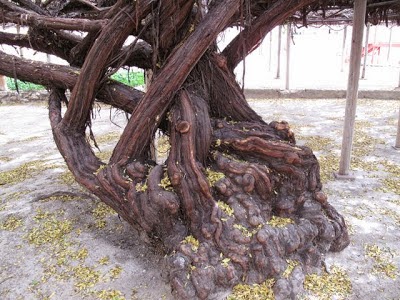
Our last visit was in celebration of our engagement. It was very meaningful to us. We discovered our own, "Tree of Life." The gnarled roots of the Tombstone Rose bush formed a Celtic knot. It's tiny roses were in full bloom symbolizing our hearts opening to each other.


The clipping we took home to commemorate Dan moving in.


Our little tree today, still thriving after 7 months. 
(Be durned if I'll let it die, it representing our relationship and all. lol)

Can our "tree of life" hold up to the weight of our first Christmas? 


Yes! It can! 

Our "tree of life" on our one year and one month anniversary!