Showing posts with label Old timey. Show all posts

Saturday, July 11, 2020

Desert Victory Gardens


Inspired by empty grocery shelves and too much free time from sheltering in place, people rushed off to Home Depot to empty the shelves of gardening supplies. Many started their own "victory gardens." 

For you young'uns out there…Victory Gardens were made popular during WWII when people planted vegetable gardens to supplement their meager rations. The government promoted victory gardens as a way to support the war effort. They even offered a booklet to help first time gardeners. 

A peek at that booklet might be helpful.


1. Don’t start what you can’t finish. Before you start a garden, count the work involved even before seedtime and through to harvest. Abandoned gardens are a waste of seed, fertilizer, tools, insecticides and labor. 

Great advice. Wait! No mention of water? The writers obviously weren’t living in the desert during a 20 year drought and record heat wave!


When I think of Victory Gardens I think of my nana’s garden with perfect rows of vegetables. But nana lived on a farm in the Midwest where there was plenty of water. The gardeners of that age weren’t concerned about pollinators going extinct due to insecticides. They were blissfully unaware of the impact of climate change or fertilizer made out of fossil fuels. 


Check out number 7. Don’t let the pole beans block out the beets. In fact, don’t let any of the tall crops shade short ones whatever they are. Growing things must get sun. 

What!? They obviously haven’t watched their veggies wither and die in the scorching June sun. But I’m afraid many first time desert gardeners might.

There are lessons to be learned in the desert all around us.


Baby saguaros survive the harsh summer by sheltering in the shade of native trees like a mesquite or palo verde. They don’t call these trees “nurse plants” for nothin’. Our garden is shaded by two palo verde trees. Veggies grown under mesquite and palo verde trees also benefit from the nitrogen those trees fix in the soil. As far as those pole beans go, the Tohono O'odham demonstrate how the three sisters (beans, squash and corn) benefit from being grown together. The beans climb the corn and fix nitrogen in the ground, and squash leaves cover the ground to protect the soil and keep down weeds. After soaking beans for dinner, I'll plant a few under my young fruit trees for a nitrogen boost.   


Unfortunately, the giant eucalyptus tree that used to shade our entire backyard died this year. Now our baby fig trees suffer from direct sunlight. Taking advice from experienced Tucson gardeners, I've concocted shade contraptions out of tomato cages and some recycled shade mesh. No need to shade or water our native trees. Our desert hackberry, acacia, mesquite, and palo verde are thriving this summer with no additional city water. Yeah! The lesson from this is to plant native trees or heritage fruit trees that can take the summer heat!

One of our most helpful low-water gardening methods was inspired by early inhabitants in tune with their desert surroundings.


Back when the Santa Cruz River flowed year around, the Tohono O’odham practiced ak chin irrigation. When the monsoon rains came, the river would overflow washing nourishing silt over the flood plain. The silt would retain the moisture and replenish the soil. It would nourish the durable native seed crops they would plant in the floodplain. In a similar fashion we keep fallen leaves and apply organic wood chip mulch to nourish the soil and retain moisture in our garden and desert landscape. This traditional T.O. method also inspired the rainwater harvesting earthworks method of slow, spread and sink.


During the hottest month of June, before the monsoon season starts, I take my old fashion watering can out early every morning before it gets too hot and saturate the mulch around my young fig trees. If water rolls off the top of the mulch, I mix the water into the mulch with my hand and then pour more water into it. Using the watering can helps me keep track of how much water I use. 

NOTE: It’s even better to water them after it cools off in the evening so the water won't evaporate in the heat of the day. 

Pioneers survived droughts by treating each drop of water as precious. You may have seen westerns where the whole family used the same bath water. Gross! But we can use the same water twice. Dan and I carry our kitchen rinse water out to our hummingbird trumpets. A friend has an outdoor shower that waters his landscape. We use the greywater from our washing machine to irrigate our heritage fruit trees. 


We gleaned a great water conservation method from the Mexicans who built Tucson. They buried round ollas (unglazed terra cotta clay pots) in the ground and planted veggies around them. Water is poured into the opening on the top. That water slowly seeps through the pot into the soil. The roots of the plants wrap around the olla taking just the amount of water they needed. This saves a lot of water!

Nourishing the soil with compost, covering it with a thin layer of mulch and watering it with rainwater are desert gardening basics. To save water and have a healthy plant or tree, it's important to know how much water they require. Likewise, it's important to sow the right plant in the right season. Another tried and true technique is to plant short-season crops after the monsoons and use added rainwater to grow fast-growing favorites.

Sadly, it’s been a while since it’s rained in our yard. And the rainwater we collected in our water barrels is long gone. So I’ve had to resort to using more city water than I want to this summer. To offset that extra water use, I look for other ways to conserve water. Instead of a full shower, I often take what nana called a “spit bath” or sponge bath and then pour that water onto plants!

Sunday, September 11, 2011

My Storytelling Journey


Jana Segal

I started attending Tucson's Teller of Tale's storytelling meetings three years ago. As a part of each meeting we would go around the room introducing ourselves. Every time I would say, “I'm here to enjoy the stories and hopefully get inspired to do a story some day.” This went on for years, until one day... they stopped having introductions.

It had been so long since I had been in a play - since before the kids were born. But I finally got that ol' itch to perform again. So when master storyteller Glenda Bonin offered a storytelling workshop, I dug out my one-woman “storytelling” musical, Magic Shoes, polished it up, and e-mailed it to her. Knowing my theater background, Glenda cautioned me about trying to act. Storytellers TELL their stories off the top of their heads. Enchanted by the story, she agreed to let me read (and sing) it at the storytelling workshop anyway. With all the carefully crafted description, we discovered that it was really more of a one-woman musical than a storytelling piece. I watched in awe as the other students actually told their stories – hoping to become inspired to do it too. Someday.

Someday came sooner than I expected when Glenda asked me if I wanted to work on a story for the professional studio recording of TOT members. While listening to other members practice, I finally got inspired! I remembered Sharlot Hall's 1880's Christmas story, “The Fruit of the Yucca Tree” that I had adapted for my short chick Western, Desert Angel. I was excited about revisiting that touching story. So I condensed it and revised it and started memorizing it (which I wasn't supposed to do) and got cold feet. I told Glenda I wouldn't be able to do it. It had been so long since I had even memorized a monologue.

Glenda gently encouraged me. She suggested that I read the story for the recording. And I sure hated to miss this opportunity to be recorded on a CD with professional storytellers! She made it so easy for me. I practiced it on my own. Then she timed my story as I read it over the phone. She said it was a lovey piece. I wasn't sure if I was ready, but thanks to Glenda's support and incredible patience, I got through it. I am proud to be on a professional storytellers' CD.

Since I was already practiced up, I volunteered to read the story for the Tombstone historians and enthusiasts at the Tombstone Territory Rendezvous. Unfortunately, some of us went dancing the night before and I must have been shouting over the music, because the next morning my voice was horse and barely audible. Afraid that no one would be able to hear me, I tried to arrange for a microphone - with no luck. When I got up to the podium, I found that I couldn't see the words on the page. I had to wear my new glasses. (Which also made me feel old since last time I was on stage I didn't need glasses.) A friend in the front row said that I looked nervous for a moment as I adjusted my glasses. The next thing I knew, it was over and the audience was applauding. Historian Casey Teffertiller graciously commented that I had a gift!

After that Glenda said it was time for me to do actual storytelling – not a reading, not a memorized monologue. She said I knew my story and I should just “tell it” at the annual TOT Christmas party. At Glenda's suggestion, I made an outline and tried to visualize the story. Lounging on our host's sofa, my fellow storytellers took turns telling their favorite Christmas stories. My story would fit in perfectly! I opted for more bean dip instead.


I discovered that I knew it better than I thought when the dialogue kept running through my head. So, after recovering from the shame of not performing, I agreed to do the storytelling performance to promote the Teller of Tales CD at Bookmans. I decided that it was alright to memorize the dialogue because of the distinct old timey dialect. It shouldn't be that hard because it was the same dialogue I knew from my short film. And I worked at paraphrasing the rest. I wasn't at all sure that I was ready for this. I was scared to death that I would forget a line and lose my place. But with my son Vlad there for support, I ran the story through in my head on the bus ride to Bookmans. Vlad helped me on with my 1880's apron and I went for it. There were sections I forgot, but in the grand tradition of theater, I kept going. And then it happened. I started telling it to the two little kids in the audience. (Vlad tells me the kids laughed.) I know their mom hung on every word! Then, just like that, it was over. Glenda asked if I wanted to do it again. Heck, no! I just got through it!

Wednesday, August 17, 2011

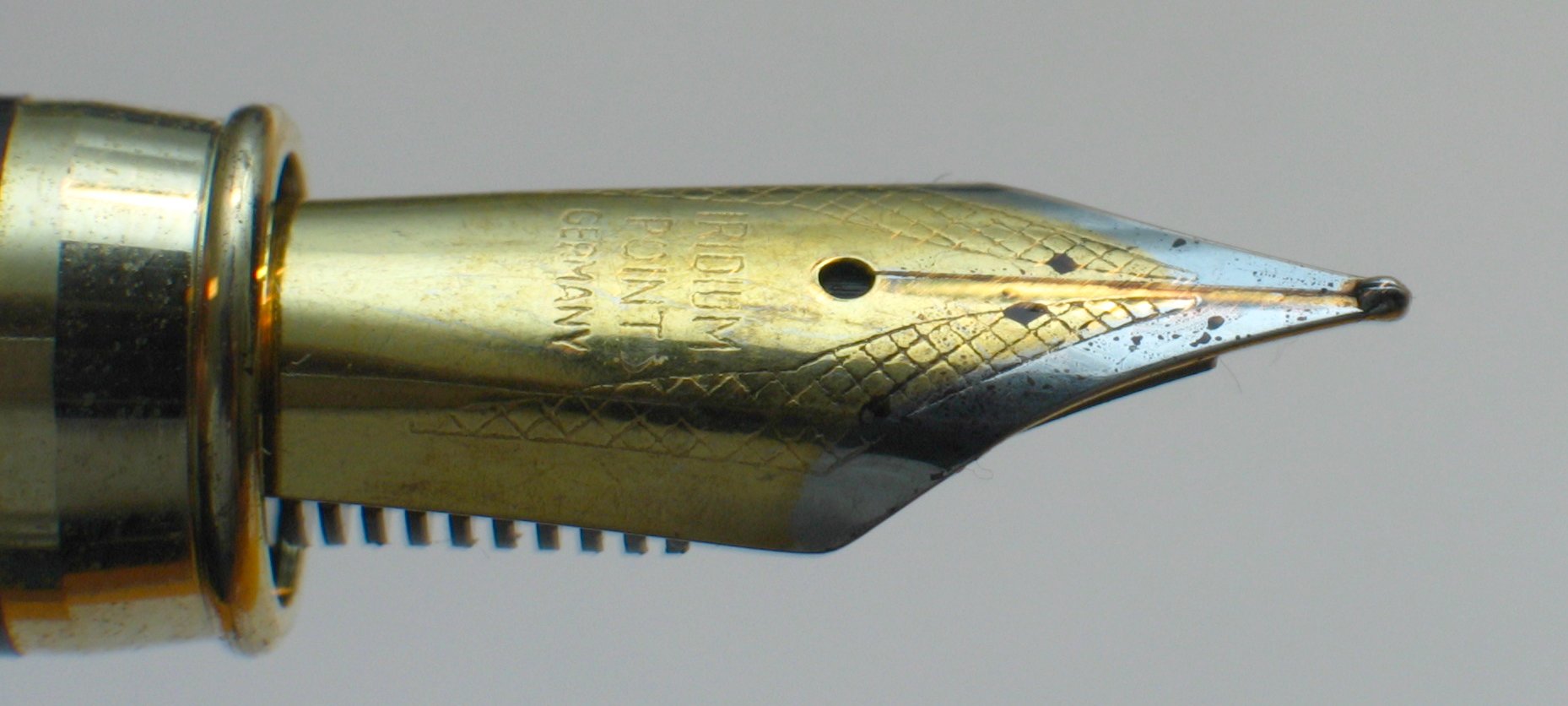
Fountain Pens and Other New-fangled Writing Tools


by Lorna Kerin Beall 

My daughter, Jana, had to drag me kicking and fighting like a roped calf into doing this blog. I also bellowed when my girls first suggested I use the computer instead of my typewriter. They said something like, "Mom you need to enter the 20th century. Using the computer makes writing so much easier." (Of course now I’m saving a ton of money on Wite-Out.)

In my defense, I remember being forced to use a fountain pen in penmanship class. As a fourth grader at Riverview Grade school in Prosser, Washington in l951 (or was it 1952?) having to use that fountain pen made me feel like I was a forced to use quill and ink. (Now I’d love that old-timey feeling, but back then it wasn’t a positive thing.) In fact, because of the inkwells, I was sure we students were still sitting at in the same ancient, dilapidated desks once used by pioneer children!

I had to dip and hold the tip of my pen in the ink bottle (which did not fit in the manufactured hole in th e desk) and pull a little gadget on the pen which filled it. Then I was free, not to create, but to practice my cursive over and over. This resulted in drips and mess and much blotting. I was assured this was the most modern way to write. (Now where have I heard that before?) 
                                                            
Fortunately, the next year my fifth grade teacher, whose birthday was the same day as mine, drove out a whole six miles to our little stucco farm house for a fried chicken dinner and homemade birthday cake. Besides a big dose of confidence, he gave me - marvel of all marvels - my very first ball point pen! Did he guess that this shy, freckled-faced ten-year-girl would one day be a writer?

So here I am blogging once again. Actually, I have to admit it is fun. And it’s especially rewarding because of those of you who read and/or respond to our blog so graciously.

Tuesday, July 26, 2011

MUMU’S THIN BREAD

(Kids, you’ll need Mama or Mumu’s help!)

l package or cake of yeast
l/4 cup lukewarm water
2 cups lukewarm milk
3 tablespoons sugar
l l/2 teaspoon salt
2 tablespoons shortening
6 cups flour

Dissolve yeast in lukewarm water. Mix milk, sugar and half of
flour into the yeast mixture. Melt shortening and pour over the mixture.
Add the salt and the rest of the flour a little at a time kneading in to make a stiff dough.
Turn out onto a floured board. Knead again.

Flatten out dough with a rolling pin (roll-roll-roll) to about
l l/2 inch thickness. Punch holes with a fork (poke-poke-poke.)
And brush with milk.
Let rise only a short time.
Bake on greased cookie sheet at 425 degree oven about 30 to 40 minutes.

*Or buy frozen dough from store. Thaw. Put on floured board. Flatten with a rolling pin to about 1& ½ inches.
Punch holes with fork. And brush with milk.
Let rise only a short time.
Bake on greased cookie sheet at 425 degree oven 30 to 40 minutes.

 EAT THE THIN BREAD WITH YOUR LOVING FAMILY!
IN YOUR OMA TUPA! (YOUR OWN HOME.)