Showing posts with label Lorna Kerin Beall. Show all posts

Wednesday, December 21, 2016

Little Miracles


by Lorna Kerin Beall

Over the years I’ve heard many Christmas stories regarding children that touched my heart. One was from my friend Jeanette. She told me about a special Lutheran Tenebrae (Candlelight) Service that she attended with her daughter’s family. Our Lutheran churches can be a bit more formal with our liturgy; beautiful and worshipful though it is. The sanctuary was darkened as the first awe-filled parishioner’s candle was lit. He began to pass the glowing light to the next person in the hushed silence. But no one was filled with more wonder than Jeanette’s toddler grandson! He suddenly burst out singing a joyful “Happy Birthday to you. Happy Birthday, Dear Jesus, Happy Birthday to you.” Jeanette didn’t know whether to hush him or hug him. Afterwards, she wished she’d joined him. And do you know what? I wish I’d been there too.
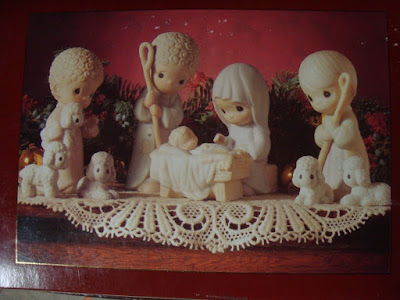

Another story that I love was told to me by my dear friend, Ruth Amos, who went to be with her loving Savior this past year. Ruth was kind of like me, always wanting her Christmas decorations to be a bit better. (I’m famous for having a “Charlie Brown Christmas Tree.”) This particular year, she felt she succeeded. She had purchased a “Precious Moment’s Manger Scene” in all its glory. She took special pains as she arranged each lovely piece in what she considered its ideal place, down to the last sweet little lamb.

Even though things were hectic as she prepared for the Christmas festivities, she couldn’t resist going back every so often for a sneak peek. But one time she was aghast! Not one precious piece was left in its perfect place. And the culprit was nearby. It was her five year old Grandson.

“Brandon!” she cried. “You messed up my manger scene.”

“No, Granny,” he said, teary-eyed. “I fixed it.”

As Ruth looked closer, she saw that indeed he had. Each cow, sheep, shepherd, king or angel was in a circle looking at, and adoring, the One in the middle: the Baby Jesus. She grabbed little Brandon up in a tender hug. “It’s perfect, sweetheart. Just perfect.” And it was.

This Christmas time may we join these sweet children in saying, singing and showing the tiny Christ child that we wish Him a joyous “Happy Birthday!”

Little Things 

Little things make me happy. 
Little things you know. 
Little things make me happy
Set my life aglow.

Little Baby Jesus 
Come down from above. 
Live Baby Jesus
Divine Act of love. 

A little smile on his face when I'm near
A little love in his heart is so clear. 

Little things make me happy. 
Little things you know. 
Little things make me happy
Set my life aglow.

(a song Jana wrote when she was little.) 

Saturday, September 19, 2015

No Longer Bound: Author Airyka Edwards Shares from the Heart

By Lorna Kerin Beall

As the president of the Ozarks Pen Masters’ Guild here in Lebanon, Missouri, I always look forward to getting together with my fellow writers.  We chattered happily as we set out our summery refreshments: homemade cookies, fruit salad, iced tea, and lemonade. We had invited the members of the community to hear Airyka Edwards speak about her book No Longer Bound, My Voice, My Freedom. While I was excited about the event, I was also a bit apprehensive. As the president, I would be introducing our guest and I prayed that everything would go well for her sake. At first hardly anyone arrived. I had even started removing chairs. But then people began to trickle in. We ended up having over 50 people! (We hurriedly put the chairs back.) Anxious to get started, I quickly introduced Airyka. I sat at the edge of my seat, eager to have her speak. But she had other ideas. She selected Debby Blades to introduce all of our members and had me lead them in reciting our credo about using our talents, great or small, in hopes that they’ll be an inspiration to others. 
                                                                                                          
Airyka even had our secretary, Ruth Amos, open with prayer. I thought all this emphasis on our guild would bore everybody to death. But what a gift she gave us! Her efforts were instrumental in getting us two new members! (They attended our meeting a month later.) I just needed to let go and enjoy!

I cheekily announced, “Now…here’s what you’ve all been waiting for!” I needn't have worried. Airyka had taken the time to make sure everyone was comfortable and felt at home (herself included.) Then Airyka shared a greater gift. How brave she was – opening up about her tragic childhood. In her book, she fearlessly shared how she and her siblings grew up with an alcoholic mother with no food or heat in the house. It was devastating to hear how her tiny newborn brother froze to death when the small children were left alone. That was just one of the heartbreaking situations they had to endure. But the amazing thing is that Airyka not only endured, but overcame through her faith in God. And she became the warm, outgoing individual, talented author, and friend that she is today!

Airyka’s book, published by Author House, is available through the Author House online bookstore and at Amazon and Barnes & Noble

Sunday, May 10, 2015

Mothers Day Gifts

On this mother’s day, I feel blessed to have worked with my mom on her love project honoring her mother, “Model T Biscuits.” You can just feel the love as you read about their cross country trip to find a little farm of their own.  


As I look back, it is really a miracle that I became a writer. When I was in kindergarten, I was so shy that I couldn't even raise my hand to go to the bathroom.  I had great difficulty learning my ABC’s. So they held me back another year. Yes, I flunked Kindergarten.  I was put in a special class for students with learning disabilities. I remember being taught to tell my right hand from my left by holding up the hand I used to salute the flag.  In second grade, I struggled to learn to read by memorizing words, so I doodled on the handouts instead. The teacher complained that I was in my own dream world, put me down another grade and suggested that I be put on drugs. But my mom never gave up on me. She hired a nice young woman to write down my stories while I illustrated them (so I could see the connection between my imagination and words.) My mom was so ahead of her time.  I’m still proud of the resulting picture books, “The Stinky Skunk” and “The Roadwalker.”

The thing I love most about my mom is how she always encouraged us kids to develop our talents. When I was little I spent all my time drawing people.  Despite our limited income, mom always made sure I had art supplies. (Seems like every birthday I got art sets.)  Somehow she convinced a local artist, Jan, to give me free art lessons.  (Jan taught me a trick for drawing faces... Draw an oval with a curved line half way down it. That's where you put the eyes.) She had been commissioned to paint a portrait of our local celebrities Roy Rogers and Dale Evans for their museum. Inspired by her painting, I sketched a picture of them too. I remember mom driving me to Victorville and waiting outside the bowling alley for Roy Rogers so I could give him my little picture. He just looked at it and walked away.

Mom inspired me every day with her passion and dedication to her own writing.  On our birthdays, she brought cupcakes to school and read her story picture books to the class. One year she read a story about a little Mexican boy and brought a lopsided homemade piƱata. I loved it! 


When my passion shifted to theater, mom drove me to the next town over to perform in Community Theater. I checked out plays and musical records from the library.  I listened to show tunes on my little record player and belted out the songs. I believe it was that love of plays that helped me to finally overcome my struggle with reading. I started writing show tunes and musicals.  My most cherished memory of my mom is climbing into her bed and singing her my latest creation. Of course, she thought they all were brilliant. On the last day of school before going off to college, I somehow found the courage to sing one of those songs, “At Last” to my choir teacher. He was inspired to write an accompaniment to it right there in the practice room while the rest of the class enjoyed their Christmas party.

Whenever I came home from college, I crawled into bed and sang mom my latest songs. After learning to critique in grad school, we would sprawl out on the couch as I critiqued her latest children’s book. One of those books was, “Model T Biscuits” which I eventually adapted into a screenplay.
directing a scene from "Model T Biscuits"
Mom and I have shared many priceless memories. We attended the Burbank Children's Film Festival and watched as Dee Wallace's acting students performed a stage reading of, “Model T Biscuits.” During the awards dinner, mom was so nervous that her stomach was gurgling. She kept escaping into the bathroom. During one of those visits, she ran into Shelly Long ( from Cheers)! She babbled something about how nervous she was. Shelly admitted that she was nervous too and gave my mom a comforting hug.

Finally, Dee Wallace (the mom from E.T.) announced that we had won the award for best short screenplay. Mom nervously uttered a speech about how her mother had inspired, “Model T Biscuits” with her sisu (Finnish for guts and determination.)  I am so grateful that my mom always showed sisu when it came to encouraging us kids.  That is the greatest gift anyone has ever given me. 

Friday, March 20, 2015

Dare to Be Mediocre with Children's Writer Katherine Paterson

Tucson Festival of Books
Lorna Kerin Beall 

For years my daughter Jana has invited me to go to the Tucson Festival of Books and I finally went. The fest was amazing.  In addition to street fair vendors, book signings with your favorite authors (500 of them!), entertainment, a science pavilion, and kids’ activities; they had authors speak on every topic imaginable.  I was delighted to find that there were at least twenty-five authors who spoke about writing for children.

The speaker I enjoyed most was two-time Newberry winner, Katharine Paterson, the author of one of my favorite children's books, The Great Gilly Hopkins. I found her encouraging, humorous and humble. She told us that no one thought she had the makings of a writer. In fact, when she was growing up, she wanted to be an actress or missionary. She ended up marrying a minister and joyfully becoming a missionary. But she still harbored thoughts about writing. Then a wise friend (and writer?) said, “Maybe that is something God is calling you to do.” Katherine protested that she didn't want to be mediocre. The friend replied, “If you don’t dare to be mediocre, you won’t be a writer.” 

I’m sure Katherine’s words inspired beginning writers, but they also rang true for me. I believe in plunging ahead and getting that first draft done, warts, typos and all. But I take it a step farther. Some of my friends only write when they’re inspired. Maybe that works for them, but I’d never get anything done.  I've discovered that I've accomplished some of my best writing when I didn't feel like it, and that the writing seems to have more depth. Then I go back later and  smooth out the rough spots. 
          
Katherine’s minister husband became her first supporter and editor. If he had insisted that she strictly maintain the traditional role of a minister’s wife, she would've never found time to write.  He informed his parishioners that she had her own calling!

Listening to Katherine Paterson
I related to this. Having six kids, we often had difficult financial times, but Richard never insisted that I get a job, and he always encouraged me to write. When he sees me puttering around the house, he’s known to  grumble, “Why aren't you in your room writing?”  This was in spite of the fact that I got (and still often get) enough rejection slips to wallpaper that room.

In addition to being inspired by Katherine, I felt a special camaraderie with the other writers.  With free lectures, panels and workshops on writing in every genre, as well as panels on self-publishing, marketing, and getting an agent, I would recommend this free festival to any author or aspiring author.

I was delighted when Katherine held up her brand new book and said, "It's called, The Story of My Life." It touches on both her life and her writing. My hubby claims that I totally ignored my own writing (not to mention cooking and housecleaning) while reading her amazing book. I hope all of you enjoy it too!

Sunday, December 14, 2014

Mining for Authentic Details

Lorna Kerin Beall
In the children’s novel I’m writing, The Wormy Bean Winter, Kata’s Finnish Pappa and her thirteen-year-old brother, Jari, go to work in a Copper Mine in Butte, Montana.
Vanadium, Colorado mine, ca 1900. Western History/Genealogy Dept., Denver Public Library.

I needed to find out if they used Carbide helmet-lamps there in 1919. So I called a librarian in Butte and, surprise of surprises, she’d seen a photograph of a miner wearing one for the very first time in that mine in 1912!  She also explained in detail how the carbide “lumps” worked. I owe her many thanks.
I also needed to know the name and description of the contraption (elevator?) the miners took to enter the mine. My daughter (who had done some research for her own screenplay) hooked me up with Carey Granger, the tour guide and care-taker of the Good Enough Silver Mine in Tombstone, Arizona. Carey told me it was called a cage.
In, The Wormy Bean Winter, Pappa and Jari have to go in the cage for the first time. I likened it to a cage of chickens they’d seen fall off a buckboard and clatter down a cliff.  Carey, thanks for sharing the authentic details that help make my story a little more accurate. I probably still need to double-check some of my mining details... 

Friday, December 16, 2011

Little Miracles


by Lorna Kerin Beall 

In past years one of my favorite things to do was to write a Christmas poem or story, some that have been graciously published. One of my favorites was published in The Lutheran Witness a couple of years ago. It was about my little mentally challenged Sunday school student, Theresa, who tore everything she touched. She tore not only her lesson paper but even the paper on her crayons causing many supposedly black puppy dogs or cows to turn out a surprising purple. At snack time Theresa even tore her paper cup, drizzling colorful (and sticky!) Kool Aid everywhere.

We were doing the Christmas story in flannel graph and each child was to put a beautiful and beloved pastel character on the flannel board. I couldn't help but wonder what I’d do about Theresa. Before long however, I was caught up in this lesson of God’s love, and in the joy of the children as they slapped each picture up with exuberance. But all too soon we were to the most wonderful picture of all, the baby Jesus – and to the last child – Theresa.

I held the fragile picture of the little pink Baby in my hand, imagining the children’s hurt cries if Theresa should tear it. Before I could change my mind, I thrust it towards her. Slowly, wide-eyed with wonder, Theresa took the picture of the Baby. She gently touched Him with her tiny finger. Then she began fingering the edges of the soft velour picture. I knew what would come next: the tearing.

But Theresa drew the baby Jesus to her lips and kissed Him. Then she patted Him gently in place on the flannel-board. I knew I’d witnessed a little Christmas miracle. And since then, I've often been inspired by some child’s simple faith. Like last year during our church Candlelight Service. When the first candles were lit a tiny 2-year-old boy in the congregation burst out singing, “Happy birthday to you, Happy Birthday to you. Happy Birthday Dear Jesus, Happy Birthday to you.”

This Christmastime may we join him, and other sweet children, in singing or saying: “Happy Birthday, Jesus!

Monday, November 14, 2011

Older than Dirt

by Lorna Kerin Beall 

I'm used to going to writers' conferences where many of the attendees are retired. It makes me feel young! But you know you are older-than-dirt when a youthful and vibrant lady editor tells you that you should put romance in your middle-grade novel with a 12-year-old protagonist and you stare at her blankly.

Apparently, I'm not the only one who has experienced this revelation. Author/speaker, Suzanne Morgan Williams told about a time she was interviewing a teen bull rider while doing research for her now published Y.A. novel, Bull Rider. She’d formerly interviewed several older bull riders, one whom answered every question with a one word answer, often yes or no. So she was thrilled to find a bull rider who was the perfect age to share the teen perspective. He even admitted to blacking out in his first ride. (That was evidently quite common.) He told her about his many youthful experiences including his emotions of fear, courage and pride. Just as Ms. Williams was starting the interview the teen’s phone rang. It was his mom and she was concerned that he was in the hotel bar with other older bull riders. He wasn’t drinking and told his mom that he’d be right up and not to worry, he was with a really old lady!

But Suzanne had a totally different experience where she interviewed an 80+-year-old elder of a tribal village. When he found out from the translator that she was only 55, he wouldn't talk to her because she was too young! When she explained to the translator that she was writing to help children, the revered elder totally reversed himself, and told her all kinds of things, even demonstrating a spear throw to the wall and showing her some kind of animal skull.

So perhaps age is relative. The good thing about being older is that you have the time to explore the child in you. In my opinion you are never too old or too young to write a story. Just let that child or elderly person come out to play!

Sunday, September 25, 2011

Unruly Weaving


by Lorna Kerin Beall

For a change of pace in our blog, I’m talking about something humorous (and I admit, naughty) that I did as a child.

When I was twelve years old, besides doing outdoor chores, it was my job to dust the living room of our humble, but cozy farmhouse. When I entered the room, I couldn’t help but groan. My older stepbrother, Bobby had been fixing a radio on the coffee- table. He’d left wires, parts and various tools scattered all over. This wasn’t unusual. He was always puttering with one thing or another in our front room. And of course, in my parents’ eyes, 15-year-old Bobby could do no wrong.

"How can he leave such a disaster in the living room, and yet have a spotless bedroom?" I asked myself. The last time I’d called him for supper, I’d taken a good peek. Nothing was out of place. The room was perfect. The bed was made and his shoes were lined neatly by it. All his clothes were hung up. And even his old electronic magazines were displayed in the artful shape of a fan! He had a big bedroom. Why the heck couldn’t he fix all those old radios and things in there?

And then I had an inspiration. I knew Bobby had gone somewhere with a friend. I hurried to his room, tumbling the covers on his bed. I even threw his pillow on the floor. I scattered his magazines. And as I was leaving, for good measure, I gave his colorful throw rug a big kick.

Of course, Bobby tattled. Mom told me later, that she couldn’t believe her ears! (She thought I was such a goody-two-shoes.) “I don’t know what got into Lorna,” she told him. “And the only thing I can think to have you do is to mess up her room.”

Bobby loved the idea. For once my bedroom was clean, and he messed it up good. He even pulled some stuff out of my trash and set it about, including a partly eaten powdered sugar donut. He could hardly wait till I went in.

But the joke was on Bobby. I sailed into my room and sat down on the rumpled bed. Removing the donut from on top of my book, I took a bite (it wasn’t too bad). Then I proceeded to read.

I still chuckle over the incident. I can’t remember if I apologized. I hope so. Bobby passed away several years ago. And I picture him up in Heaven, shaking his head and chuckling. In spite of our squabbles, he always had a good sense of humor.

Wednesday, September 14, 2011

The Mended Valentine


by Lorna Kerin Beall

Years ago I had a beautiful blue willow platter that I treasured hanging on my dining room wall. One day when I was gone, my two younger daughters chased each other around the table, and knocked the platter down, shattering it. Filled with remorse, they found each miniscule piece and glued it back together again. I promptly hung it up again. My oldest daughter, Jana, pointed out something I already knew. The platter was ugly. But I persisted in leaving it up for years. Finally, in an act of love, Jana replaced it. I took the broken platter down, and proudly hung the new one. But I still cherish the remembrance of how my younger daughters so lovingly mended the other. That incident and something a friend told me about an experience of hers inspired this little piece.

The Mended Valentine

When my friend’s lovely home burned,
with all its fancy furnishings and fine collectibles,
she said the thing she regretted losing the most
was a torn and taped-together valentine.

Her grown son had made it when he was just 6 years old.
She’d been canning that day long ago,
and was tightening the lid on her last jar of peaches,
as her boy labored to get both sides even on a valentine.
His little tongue was stuck out in concentration,
as he drew and smudged and erased, again and again.
She tried to help, but was pushed politely away.

“Must be for that little red-headed girl he likes,
the one who lives in the brown house down the street,”
she told herself, as she continued her tiresome canning job.
She sighed. The steam from the kettle, the 100 degree heat,
and the blazing wood stove were wearing her down.

With great effort, she hoisted the last rack of filled mason jars
from the giant pot that was boiling and splattering on the stove.
In the hot sun streaming through the kitchen windows
the peaches in the glass jars looked like gold.
But they felt more like lead.
She fanned herself with her wilted apron.

Her son chose that moment to hand her his creation.
“For me?” she asked, taking it, but then setting it down,
as she pushed the kettle to a cooler spot on the stove.
When she turned back she saw that her teary-eyed son
Had snatched it up, and was ripping it to bits.

She tried to hug him, but he pulled away, and ran from the room.
She got down on her knees and picked up each tiny piece.
She put the valentine back together with tape, tears and love,
And after she showed it to him, she placed it with all of her other treasures, in an old cedar chest.

My friend had saved the valentine all those many years.
Occasionally when the chest was opened,
her tall and bearded son would pick up the valentine,
admonishing her for keeping the silly old thing.
And sometimes, his face as red as the valentine he’d made,
he’d even admit that he was glad she had.

And though the mended valentine is long gone,
along with the polished keepsake chest that held it,
I know it remains secure and cherished in both their hearts.

Tuesday, September 6, 2011

Delighting in Books

by Lorna Kerin Beall

When my daughter, Jana, was here we had a great time visiting the Laura Ingalls Wilder Museum in Mansfield, Missouri. It was a beautiful July day, surprisingly not too hot. We enjoyed the museum, the grounds, and touring both homes. Two of my favorite things were the buggy they traveled to Missouri in and Pa’s fiddle. I also love the paper dolls of Laura and her sisters that I bought in the gift shop for my granddaughter’s birthday.

As Jana and I looked at the books, I was intrigued once again by how both Laura and her daughter, Rose, were writers. (As Jana and I are.) I have always loved Laura’s Little House books (especially since I also write children's books.) I’d recently purchased a used copy of Rose’s Young Pioneers that I thoroughly enjoyed.

Both Laura’s and Rose’s books were exciting survival stories where the protagonists
faced all kinds of dangers and challenges. (Often on the prairie.) The Little House books had more description. (Something I don’t care for in other books.) But seeing things through young Laura’s eyes was different. I ate it up like my grandma’s Finnish pulla. (cinnamon rolls.) Perhaps this was due to the fact that when Laura’s sister, Mary, lost her vision, young Laura became her eyes, describing everything for her. This enabled Laura to see everything in a new and fresh way. Sometimes with wonder and delight. And sometimes with dismay and hurt. This came through in Laura Ingalls Wilder’s writing.

Though Laura and her family overcome all sorts of challenges and problems in the Little House books, and there’s plenty of plot, I feel the books are definitely character-driven. I feel I know spunky little Laura who got all excited over a tin cup, a stick of candy and a penny for Christmas. 

Tuesday, August 30, 2011

Servin' up Wormy Beans with Sisu


 by Lorna Kerin Beall

“Ugh,” “Ick,” and “Eww,” Nana's grandchildren responded when she told them how her family survived on wormy beans one hard Minnesota winter when she was a child. Nana smacked her lips, "Yum! Protein!"  I wasn’t so shocked. After all, didn’t they normally eat weird things like pickled pigs feet, and pig brains (that went by the name of headcheese?) I’d even heard that they, as well as my own family, ate rattlesnakes!

Little did I know at the time that wormy beans would play such a big part in the middle-grade novel I would someday write. “The Wormy Bean Winter," is based on real-life events of my Finnish American family. Though, as my husband Richard likes to point out,  it was his side of the family who actually ate the wormy beans!

In a card promoting my manuscript, I included the synopsis, “Kata didn’t realize that something as tiny as a wormy bean could be the difference between disaster and survival. While homesteading on the South Dakota prairie during the harsh winter of 1919, her family was barely surviving on their last bag of beans. When they discovered they were eating beans infested with worms, Pappa went to work in a copper mine leaving 12-year-old Kata in charge of the outdoor chores in the bitter cold. What was worse was that Papa’s confidence in Kate was bean-sized, too. She had to prove her sisu, the Finnish word for guts and determination, while she faced challenges like her baby sister’s ear nearly freezing off, vicious old “Three-Toes” the wolf, and all her sisters’ refusal to eat the wormy beans even if it meant starvation!”

I loved writing the book and coming to know more about my family. And I am so thankful for the humor, sisu and faith that both our families had when they helped settle this wild and wondrous country.  

Wednesday, August 17, 2011

Fountain Pens and Other New-fangled Writing Tools


by Lorna Kerin Beall 

My daughter, Jana, had to drag me kicking and fighting like a roped calf into doing this blog. I also bellowed when my girls first suggested I use the computer instead of my typewriter. They said something like, "Mom you need to enter the 20th century. Using the computer makes writing so much easier." (Of course now I’m saving a ton of money on Wite-Out.)

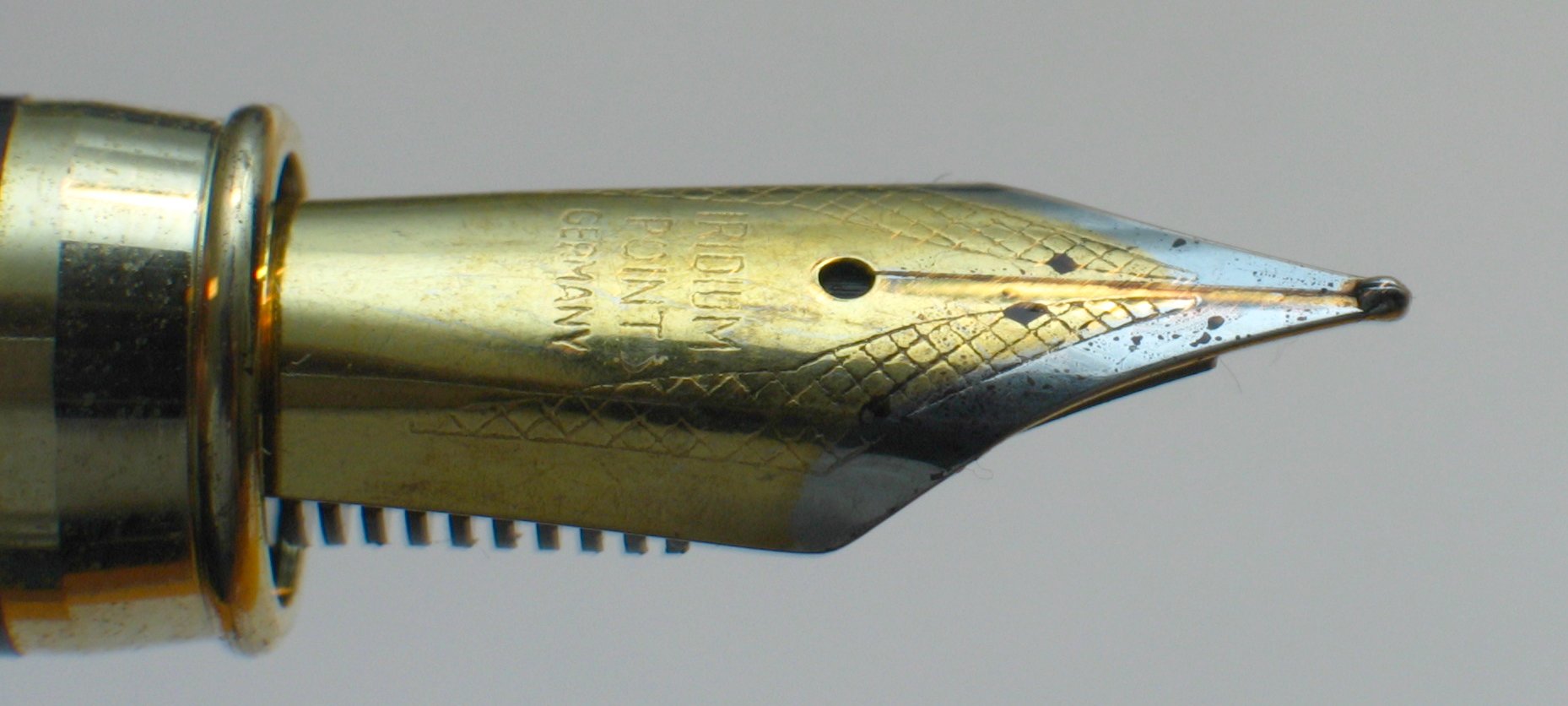
In my defense, I remember being forced to use a fountain pen in penmanship class. As a fourth grader at Riverview Grade school in Prosser, Washington in l951 (or was it 1952?) having to use that fountain pen made me feel like I was a forced to use quill and ink. (Now I’d love that old-timey feeling, but back then it wasn’t a positive thing.) In fact, because of the inkwells, I was sure we students were still sitting at in the same ancient, dilapidated desks once used by pioneer children!

I had to dip and hold the tip of my pen in the ink bottle (which did not fit in the manufactured hole in th e desk) and pull a little gadget on the pen which filled it. Then I was free, not to create, but to practice my cursive over and over. This resulted in drips and mess and much blotting. I was assured this was the most modern way to write. (Now where have I heard that before?) 
                                                            
Fortunately, the next year my fifth grade teacher, whose birthday was the same day as mine, drove out a whole six miles to our little stucco farm house for a fried chicken dinner and homemade birthday cake. Besides a big dose of confidence, he gave me - marvel of all marvels - my very first ball point pen! Did he guess that this shy, freckled-faced ten-year-girl would one day be a writer?

So here I am blogging once again. Actually, I have to admit it is fun. And it’s especially rewarding because of those of you who read and/or respond to our blog so graciously.

Tuesday, August 2, 2011

Rag Dolls and Kewpies

by Lorna Kerin Beall


I recently attended an OWAIC Writing for Children conference in Springfield with two of my good friends. Though it wasn’t the main theme of the conference, the focus that I came home with was to "write from the heart."

I hadn’t planned to buy a book but keynote speaker Paula Morrow, the editor and publisher of Boxing Tree Books, put out copies of the book, Rose O’Neil, The Girl Who Loved to Draw, by Linda Brewster. (Rose O’Neil was the creator of the Kewpie Doll.) It’s a beautiful book with innumerable pictures illustrating Rose’s life as an artist by both Ms. O’Neil and author Ms. Brewster. It’s a feast for eyes and heart. And I loved how, in the early chapters, the author captured the child like wonder of little Rosie. 

But one reason I wanted this book was because it reminded me of the Kewpie doll that I got when I was four-years-old and living with my Finnish Mumu in the tiny town of Buffalo, South Dakota.

When I was six, my Mama married my Step-Daddy and we were about to head out West to find a new home. I wrapped Kewpie in tissue paper, and after a final kiss, put her in a Buster Brown shoe box and packed her with the rest of our things in the back seat. She traveled with us to an apple picking camp in Hood River, Oregon. I felt bad that Kewpie was missing the sights like the huge Hood River and Mount Hood. The mountain looked like my Grandpa with its white head and beard of snow. But I was happy that Kewpie was with us. At least I got to cuddle the Raggedy-Ann my Mumu had made. We’d tell Kewpie everything when we got to our brand new own home. (Our oma tupa.)
We loved our new stucco-covered home in Prosser, Washington even though Mama said it looked like a chicken coop and we had to use the outhouse at first. Snug in our oma tupa,  I gave both Kewpie and Raggedy Ann a goodnight kiss every single night. 

I still have my porcellin Kewpie though her “skin” is cracked and wrinkled much like my own. Sometimes it's good to unpack childhood toys and family heirlooms to see what precious memories they conjure up and what stories they inspire. I appreciate the sweet reminder I got to "write from the heart"  from the conference, Linda Brewster’s book, and memories of my beloved Kewpie Doll.

Tuesday, July 26, 2011

Weavings of Another Kind: Braided Pulla and Love.

by Lorna Kerin Beall

In Model T Biscuits Mama, Step-daddy and six-year-old Lorna head cross country in their Model T picking apples along the way to stretch their meager nest egg until they can find a little farm of their own. Mama shows her sisu, the Finnish word for guts, determination, and ingenuity, when she’s faced with no oven in the apple-picking camp. She surprises Lorna and Step-Daddy by baking biscuits on the engine (actually the flat head) of the Model T.

Earlier in the story, Step-Daddy recalls Mumu's baking. He rubs his belly and says, "That house always smelled of fresh bread." 
Lorna answers, "Know how we made it? Know how Mumu and I got the bread so skinny? And made the outside so crispy? We rolled the dough out flat. Then poke, poke, poke, we poked holes in it. Then we baked it smack-dab! - on the bottom of the oven. Mumu even let me..."

While I was writing Model T Biscuits, I tried to weave some Finnish customs and language into the story. One way I did this was by including traditional Finnish food. My mama, as well as my Finnish Mumu who raised me up until this point, loved to bake heino leipƤ: Finnish flat bread, pulla: Finnish cinnamon rolls, and other braided kinds of pullaMy Mumu’s little home in Buffalo, South Dakota, always smelled of fresh-baked pastry. And the kahvi pot was always on for neighbors or passers-by who were welcome to pop in. Tugging her little sled, my small cousin, Willo Boe and our Mumu delivered homemade bread to shut-ins and other friends. In my story, the family heads out West and Lorna frets that Mumu won’t be able to deliver bread without her, since the wheel on her wobbly little wagon is broken.

The smell of fresh baked goods brings back cherished memories of Mumu and Mama baking in our big black cast iron stove. All kinds of love was kneaded and braided into these Finnish delights.

Here are two recipes that I included in prologue of, “Model T Biscuits.”  


MODEL T DROP BISCUITS

(Kids, you’ll need your Mama’s or Mumu’s help.)

Start up the Model T engine. Let it warm up.

If you don’t have a Model T, heat oven to 450 degrees.

Model T directions: Grease tin cake pan
Bake covered.

Oven: Use a tin cake pan. Do not grease. Do not cover.

2 cups flour
l/2 tsp. salt
4 teaspoons baking powder
l/2 teaspoon cream of tartar
2 teaspoons sugar
l/2 cup of lard or shortening
¾ cup buttermilk (Used canned milk in the Picking Camp.)
Mix dry ingredients. Add the lard or shortening.
Then add milk. Stir gently till soft dough forms.

Model T: Drop by spoonfuls on a greased cake pan.

Oven: Drop by spoonfuls onto an ungreased cake pan..

Model T: Check frequently.

Oven: Bake for seven to nine minutes.

*Or buy canned biscuit dough from the supermarket.
Make and bake according to directions on the package.

Serve the biscuits hot with butter and honey.

IF POSSIBLE LOOK AT SUNRISE WHILE EATING.

MUMU’S THIN BREAD

(Kids, you’ll need Mama or Mumu’s help!)

l package or cake of yeast
l/4 cup lukewarm water
2 cups lukewarm milk
3 tablespoons sugar
l l/2 teaspoon salt
2 tablespoons shortening
6 cups flour

Dissolve yeast in lukewarm water. Mix milk, sugar and half of
flour into the yeast mixture. Melt shortening and pour over the mixture.
Add the salt and the rest of the flour a little at a time kneading in to make a stiff dough.
Turn out onto a floured board. Knead again.

Flatten out dough with a rolling pin (roll-roll-roll) to about
l l/2 inch thickness. Punch holes with a fork (poke-poke-poke.)
And brush with milk.
Let rise only a short time.
Bake on greased cookie sheet at 425 degree oven about 30 to 40 minutes.

*Or buy frozen dough from store. Thaw. Put on floured board. Flatten with a rolling pin to about 1& ½ inches.
Punch holes with fork. And brush with milk.
Let rise only a short time.
Bake on greased cookie sheet at 425 degree oven 30 to 40 minutes.

 EAT THE THIN BREAD WITH YOUR LOVING FAMILY!
IN YOUR OMA TUPA! (YOUR OWN HOME.)

Monday, July 25, 2011

Critiquing My Mommy

Jana Segal

After getting a crash course in critiquing from Brandeis, I watched a news program about a tugboat being sunk to create an artificial reef because the boaters destroyed the reefs where the sea creatures lived. I thought it would make a great picture book, so I shared it with my mom. This is when I started critiquing my mom's children's picture book manuscripts. It was a bit of a stretch since I hadn't read any kids books since I was little. Not really my thing. A little too cutesy for my taste. I was more into reading plays and screenplays. Tennessee Williams. Grad school made me into a hardened critquer, but my sweet mommie learned to take it – and like it. The other day I was critiquing a fellow filmmaker's script before I could get to hers and she was actually jealous.

I used to type up a few pages of  notes, but I found it easier to jot down the notes right onto the manuscript. I'd send the whole manuscript back in the mail.  Sometimes I gave her feedback when I came home for Christmas. After catching up on family gossip, we would sit on the couch, my mom sipping from a jar of green tea, and go through my notes. When the price of long distance came down, I read my comments over the phone as she followed along in the manuscript. But this can be a long, tedious process – especially if she starts defending her writing. Argh! I forgot about that.

At first I had a problem with the cutesy word play in her children's stories. I wrote all over her manuscript, “Too cutesy!” She liked to make up descriptive words like pew-mongous (big stink) and puffle snuffle (the sound of the tired tug.) I didn't know how much cutesy was acceptable for children's books. This was a little point of contention. Mom insisted that it was her style. But it drove me crazy! Mom had created a captain character who pulled on his nose when he was worried. There were two phrases in particular that bothered me, “Old Snozzy yanked on his nose like it was a clump of seaweed;” and, “Still he jerked on his nose like a piece of beef jerky.” (Now, really, how often do you yank on seaweed or jerk on beef jerky?) 

Not knowing much about children's writing, I often referred to dramatic concepts I learned in the theater. I encouraged her to strengthen the character's goal and motivation, add more action and conflict then build to a climax . My mom created her own unique style using her descriptive gifts to great effect in exciting action sequences. Her colorful, bouncy descriptions also added to the fun of the underwater see world. While working on the rhythm of some phrases, I started playing around with cutesy wording myself. It's fun! Recently, I read a rewrite and actually missed some of the “cutesy” words she had cut out!

When she finished her tugboat series, mom started on a new kind of book inspired by her family history called, Model T Biscuits. I was so excited about her story that I asked her if I could work on the screenplay adaptation. After critiquing rewrite after rewrite, I knew the story so well that it only took two weeks to write the 35 page script. That felt great! (Especially since it took me YEARS to write, Walking with Grace!)

When adapting the book for the screen, I tried to find ways to show the internal dialogue through actions and dialogue. (For you new screenwriters – nothing goes in the screenplay that we can't see or hear. The one exception is the one sentence description when you first introduce a character.) The book version includes little Lorna's jealous thoughts about the little rich girl in a white dress that her mom took care of in the city. I added a scene where Lorna sees a similar white dress in a store window and changes into it so her mother will love her too. I also worked on centering the story around the conflict of their financial difficulties during their cross-county trek. If they didn't have enough money, they wouldn't be able to get their little farm.

I was honored to do the adaptation so I could stay true to my mom's vision. 

Tuesday, July 19, 2011

PATCHWORK WRITING

by Lorna Kerin Beall

After Jana did the screenplay adaptation of Model T Biscuits she had several of her filmmaker friends critique it before sending it out to a contest. Some had the feeling that our protagonist, 8-year-old Lorna, was a little too whiny and needy and therefore not completely likable. A few of my writer friends had the same opinion. (While others loved her just as she was.) My opinion, Little Lorna was me! Now what was not likable about perfect little fictional me? Ha! Obviously I was too close to the situation to see clearly. Perhaps some of you may be able to relate to this problem when basing fiction on your own lives.


In Model T Biscuits,  little Lorna was overjoyed to be reunited with her Mama after being raised by her Finnish Mumu. She was also anxious that Mama might not stick around. So what was the problem? Lorna didn’t really want Mama and Step-Daddy (who were newlyweds) to hold hands, smooch or have privacy at bedtime. After getting her friends’ feedback, Jana suggested that I have the parents hang a sheet in the corner of the migrant apple-picking shack, and have Lorna come to accept it. This enabled me to have Step-Daddy duck under the sheet and to give Lorna her rag doll in order to show his love and tenderness early on. So honoring their feedback by patching up that issue inspired more creative ideas!

Besides working on the screenplay, I continued to tweak my children’s novel, Model T Biscuits, which the screenplay was based on. Advice from our writer friends was extremely helpful. We weighed each suggestion carefully, though we might not always take it. Later I joined a local critique group, which is invaluable, and have been privileged to work with my SCBWI mentor, Leslie Wyatt on my children’s novel, Wormy Bean Winter.

Patchwork quilts are sometimes stitched by a group of caring hands. I am grateful for the writers who have helped us stitch (or take out stitches) in our writing endeavors.

Monday, July 18, 2011

How to Grow a Thick Skin (or Getting Your Writing Critiqued)

by Jana Segal

I am a strong believer that getting good feedback is an indispensable part of the writer's craft. After adapting my mom's childhood story Model T Biscuits into a short screenplay,  I gave the script to five screenwriters/filmmakers to critique. They all said that the little girl was too whiny and needy. It made her unlikeable. (Hey! That's my mommy you're talkin' about!) But if five people agree, there must be something to it. We rewrote it, making her less needy and we won two screenwriting contests.


Now, I know from experience that it is hard to have someone tear apart your creation, your baby. But I have found, that as the writer, I am just too close to the material to know if I am getting the point across. Sometimes I'm too subtle or sometimes I think something is there, that just isn't. I guess my mind fills in the blanks.

I remember my first college playwriting professor, Doctor Louis saying, “It's not as coherent as you think it is.” Ouch! I thought, “What's not clear?” While digging through my college papers, I found a scrap of paper that read, “Writing is rewriting. Doc.” Truer words have never been said. (I still get a yearly Christmas poem from Doc.)

I got my first lessons in critiquing while attending Brandeis University. The playwriting program consisted mostly of a weekly script reading performed by third year actors and then feedback lead by a dramaturg. (one of my fellow, overly competitive playwrights) Finally, it was my turn. I had them read my beloved musical, “Seeker” a true story about a legally blind woman who dreamed of being a dancer. I left in tears because another playwright was laughing at my baby, my award winning musical! The playwright confessed that while she was reading it, all she could see was the Saturday Night Live skit where the blind dancers ran into each other and leaped off the stage. Needless to say, I didn't find her feedback very constructive. Seems kinda funny now.

I learned how to write screenplays by reading books and having my script, “Walking with Grace” workshopped (ie. critiqued) at the Frederick Douglas Creative Arts Center in New York. “Walking with Grace” was inspired by a true event in my life when I took care of sweet elderly couple who was dealing with the wife, Grace's, Alzheimers disease. It was really a love project, but I was too close to it to see it objectively. I had written it with Jessica Tandy and Hume Cronyn in mind. In fact, I looked at a picture of Jessica while I wrote. I sent a query letter to Ms. Tandy through her agent. Mr. Cronyn sent me a handwritten response saying that they could never read my script because it was too depressing. His wife was going through the same thing. So, I needed to mellow out the harsh reality and show more of the love I had for Grace. At the FDCAC, they said that they couldn't believe that a 20 year old would stay in an abusive situation like that. So I had to make my character a granddaughter rather than a home health aide. I had to develop that character's backstory and write another draft that revolved around her as the main character. 

I had every draft critiqued.  I suppose at some point, every writer and filmmaker I knew had read my screenplay. For the price of some sweet and sour meatballs, a group of Tucson screen actors read my script aloud around my kitchen table and gave me some more feedback. It was touching to hear my words performed. It all paid off when a local Theater Company, Damesrocket, did a reading with a director and actors. It was very full-filling to see the audience's reaction to my work. (And a rare treat for a screenwriter.) A man came up to me crying. He said that the old man reminded him of his father. 

I highly recommend putting together a writers' group with people you trust to give you honest, constructive feedback. Feedback is an iffy thing. Sometimes it can hurt. You have to put on a thick skin and pick and choose what feedback is useful. Some people just wont get it. Sometimes they don't even like the genre. My rule of thumb is that if several people say the same thing, it's worth considering. But in the end, it is your writing.   

Tuesday, July 5, 2011

How I Came to Write "Model T Biscuits"


Lorna Kerin Beall

    I have a very poignant memory of one Sunday when I was 6-years-old. Recalling this incident is what inspired me to begin writing Model T Biscuits. Remembering the experience makes me feel like I am that little girl again.

    I was attending the Cave Hills Lutheran Church, near Buffalo, South Dakota, with my Mumu (my Finnish Grandma.) I clung to Mumu’s hand. Though all the folks, who seemed very big and old to me, were friendly, I had a lonesome feeling way down in my tummy. I missed my freckly, redheaded Mama. Unable to find work close by, she was away working in the big city of Chicago as a governess. I had trouble saying the word “governess,” and Mama had told me I could say, “nanny.” She sent me a postcard with lots of tall skinny buildings on it. They looked scary. But the XOXO’s she scribbled on the other side of the scary postcard made me feel all better.

    One time when she was home for a visit, she showed me a picture of the boy and girl she took care of, Charles and Jacqueline. They were standing as pretty-as-you-please in front of a big mansion. “Is that our house, Mama?” I’d asked. She shook her head, and reassured me that someday we’d have our oma tupa, our own home. I tried very hard to pronounce the girls name. “Jac – Jac…” Mama told me I could call the little rich girl Jackie. Jackie was dressed in a frilly white dress that was prettier than any I owned. And Charles had a white shirt and shorts on. Also suspenders. I wished I knew what color those suspenders were. Everything in the photograph was black and white. Even Mama’s red hair. She was in the picture, too, holding onto the children’s hands. I didn’t like that. She was my Mama.

    I knew my Mumu loved me. Our little stucco house always smelled for homemade thin bread. She called it a big Finnish word I couldn’t say, something -- leapa. Only she spelled that last part “l-e-i-p-Ƥ.” Mumu and my Aunts loved to chatter away in those hard words that I couldn’t understand. I don’t think they wanted me know what they were saying. From the funny looks on their faces I knew they were telling secrets.

     Mama married my Step-Daddy, and they came to see us. They said they were going to Wash-ing-ton, State, to see his sister, Sill. They promised to take me too. But I didn’t believe them.  I always raised a big noisy fuss when Mama had to go back to Chicago after a trip home, so she’d sneak off in the middle of the night. I was afraid they’d sneak off without me.  So I hid away in he back seat of our
Model T.

    And that’s where and when Model T Biscuits begins.

Monday, July 4, 2011

Family and Family Heritage Inspire Writing


by Lorna Kerin Beall

Who would think that a little girl raised in a tiny farm house with only two books to her name, (“Heidi” and “Cherry Ames, Student Nurse”) would develop a life long love of reading and writing. I have been writing for over 50 years, publishing articles and short story manuscripts in magazines such as Guideposts. One was reprinted in a Hallmark book. These minor early successes encouraged me to persevere and develop my distinctive voice. During this time I was also progressing to children’s picture book manuscripts. Having raised six children and taught Sunday school for disabled children, I saw a need for more books that dealt with children's issues. So I wrote books that centered both on light-hearted issues, such as discovering the simple treasures in life, and more serious issues such as child abuse. Wanting to communicate to children, I volunteered to read my picture books in my own children’s classrooms. It meant so much when I saw the flicker in the kids’ eyes.

About 20 years ago, I attended my first SCBWI conference. Seeing all those people writing children's books opened up a whole new world to me. Since then I’ve completed quite a body of work, writing both picture books and children’s novel manuscripts. My middle-grade novel, “Model T Biscuits” is very dear to my heart because it is inspired by my experience of being reunited with my mother in 1948 after being raised for my first six years by my Finnish Mumu (Grandmother) in Buffalo, South Dakota. This became a family project when my oldest daughter, Jana Segal, worked with me on the screenplay adaptation further carrying on our family heritage. Our script won first place in the Santa Clarita International Family Film Festival as well as the Moondance International Film Festival short screenplay contests. At Santa Clarita, we had the pleasure of seeing our script read by actors from the Dee Wallace acting studio.

Some years back, I attended a family reunion in South Dakota and heard stories of how my Finnish grandparents survived the harsh prairie winters in their homestead shack. They really had what we Finns call sisu or guts and determination. These family stories inspired my historical fiction, middle-grade novel, “Wormy Bean Winter.” This past year, I was honored with a Missouri SCBWI mentorship to work on “Wormy Bean Winter” with children’s author, Leslie J. Wyatt. That experience was incredibly rewarding, and I know that my manuscript is much stronger thanks to Leslie.

I am grateful for my small town upbringing in Buffalo, South Dakota and Prosser, Washington that taught me the value of family and heritage that influences my writing today.