Showing posts with label family memories. Show all posts

Saturday, July 11, 2020

Desert Victory Gardens


Inspired by empty grocery shelves and too much free time from sheltering in place, people rushed off to Home Depot to empty the shelves of gardening supplies. Many started their own "victory gardens." 

For you young'uns out there…Victory Gardens were made popular during WWII when people planted vegetable gardens to supplement their meager rations. The government promoted victory gardens as a way to support the war effort. They even offered a booklet to help first time gardeners. 

A peek at that booklet might be helpful.


1. Don’t start what you can’t finish. Before you start a garden, count the work involved even before seedtime and through to harvest. Abandoned gardens are a waste of seed, fertilizer, tools, insecticides and labor. 

Great advice. Wait! No mention of water? The writers obviously weren’t living in the desert during a 20 year drought and record heat wave!


When I think of Victory Gardens I think of my nana’s garden with perfect rows of vegetables. But nana lived on a farm in the Midwest where there was plenty of water. The gardeners of that age weren’t concerned about pollinators going extinct due to insecticides. They were blissfully unaware of the impact of climate change or fertilizer made out of fossil fuels. 


Check out number 7. Don’t let the pole beans block out the beets. In fact, don’t let any of the tall crops shade short ones whatever they are. Growing things must get sun. 

What!? They obviously haven’t watched their veggies wither and die in the scorching June sun. But I’m afraid many first time desert gardeners might.

There are lessons to be learned in the desert all around us.


Baby saguaros survive the harsh summer by sheltering in the shade of native trees like a mesquite or palo verde. They don’t call these trees “nurse plants” for nothin’. Our garden is shaded by two palo verde trees. Veggies grown under mesquite and palo verde trees also benefit from the nitrogen those trees fix in the soil. As far as those pole beans go, the Tohono O'odham demonstrate how the three sisters (beans, squash and corn) benefit from being grown together. The beans climb the corn and fix nitrogen in the ground, and squash leaves cover the ground to protect the soil and keep down weeds. After soaking beans for dinner, I'll plant a few under my young fruit trees for a nitrogen boost.   


Unfortunately, the giant eucalyptus tree that used to shade our entire backyard died this year. Now our baby fig trees suffer from direct sunlight. Taking advice from experienced Tucson gardeners, I've concocted shade contraptions out of tomato cages and some recycled shade mesh. No need to shade or water our native trees. Our desert hackberry, acacia, mesquite, and palo verde are thriving this summer with no additional city water. Yeah! The lesson from this is to plant native trees or heritage fruit trees that can take the summer heat!

One of our most helpful low-water gardening methods was inspired by early inhabitants in tune with their desert surroundings.


Back when the Santa Cruz River flowed year around, the Tohono O’odham practiced ak chin irrigation. When the monsoon rains came, the river would overflow washing nourishing silt over the flood plain. The silt would retain the moisture and replenish the soil. It would nourish the durable native seed crops they would plant in the floodplain. In a similar fashion we keep fallen leaves and apply organic wood chip mulch to nourish the soil and retain moisture in our garden and desert landscape. This traditional T.O. method also inspired the rainwater harvesting earthworks method of slow, spread and sink.


During the hottest month of June, before the monsoon season starts, I take my old fashion watering can out early every morning before it gets too hot and saturate the mulch around my young fig trees. If water rolls off the top of the mulch, I mix the water into the mulch with my hand and then pour more water into it. Using the watering can helps me keep track of how much water I use. 

NOTE: It’s even better to water them after it cools off in the evening so the water won't evaporate in the heat of the day. 

Pioneers survived droughts by treating each drop of water as precious. You may have seen westerns where the whole family used the same bath water. Gross! But we can use the same water twice. Dan and I carry our kitchen rinse water out to our hummingbird trumpets. A friend has an outdoor shower that waters his landscape. We use the greywater from our washing machine to irrigate our heritage fruit trees. 


We gleaned a great water conservation method from the Mexicans who built Tucson. They buried round ollas (unglazed terra cotta clay pots) in the ground and planted veggies around them. Water is poured into the opening on the top. That water slowly seeps through the pot into the soil. The roots of the plants wrap around the olla taking just the amount of water they needed. This saves a lot of water!

Nourishing the soil with compost, covering it with a thin layer of mulch and watering it with rainwater are desert gardening basics. To save water and have a healthy plant or tree, it's important to know how much water they require. Likewise, it's important to sow the right plant in the right season. Another tried and true technique is to plant short-season crops after the monsoons and use added rainwater to grow fast-growing favorites.

Sadly, it’s been a while since it’s rained in our yard. And the rainwater we collected in our water barrels is long gone. So I’ve had to resort to using more city water than I want to this summer. To offset that extra water use, I look for other ways to conserve water. Instead of a full shower, I often take what nana called a “spit bath” or sponge bath and then pour that water onto plants!

Sunday, September 25, 2011

Unruly Weaving


by Lorna Kerin Beall

For a change of pace in our blog, I’m talking about something humorous (and I admit, naughty) that I did as a child.

When I was twelve years old, besides doing outdoor chores, it was my job to dust the living room of our humble, but cozy farmhouse. When I entered the room, I couldn’t help but groan. My older stepbrother, Bobby had been fixing a radio on the coffee- table. He’d left wires, parts and various tools scattered all over. This wasn’t unusual. He was always puttering with one thing or another in our front room. And of course, in my parents’ eyes, 15-year-old Bobby could do no wrong.

"How can he leave such a disaster in the living room, and yet have a spotless bedroom?" I asked myself. The last time I’d called him for supper, I’d taken a good peek. Nothing was out of place. The room was perfect. The bed was made and his shoes were lined neatly by it. All his clothes were hung up. And even his old electronic magazines were displayed in the artful shape of a fan! He had a big bedroom. Why the heck couldn’t he fix all those old radios and things in there?

And then I had an inspiration. I knew Bobby had gone somewhere with a friend. I hurried to his room, tumbling the covers on his bed. I even threw his pillow on the floor. I scattered his magazines. And as I was leaving, for good measure, I gave his colorful throw rug a big kick.

Of course, Bobby tattled. Mom told me later, that she couldn’t believe her ears! (She thought I was such a goody-two-shoes.) “I don’t know what got into Lorna,” she told him. “And the only thing I can think to have you do is to mess up her room.”

Bobby loved the idea. For once my bedroom was clean, and he messed it up good. He even pulled some stuff out of my trash and set it about, including a partly eaten powdered sugar donut. He could hardly wait till I went in.

But the joke was on Bobby. I sailed into my room and sat down on the rumpled bed. Removing the donut from on top of my book, I took a bite (it wasn’t too bad). Then I proceeded to read.

I still chuckle over the incident. I can’t remember if I apologized. I hope so. Bobby passed away several years ago. And I picture him up in Heaven, shaking his head and chuckling. In spite of our squabbles, he always had a good sense of humor.

Wednesday, September 14, 2011

The Mended Valentine


by Lorna Kerin Beall

Years ago I had a beautiful blue willow platter that I treasured hanging on my dining room wall. One day when I was gone, my two younger daughters chased each other around the table, and knocked the platter down, shattering it. Filled with remorse, they found each miniscule piece and glued it back together again. I promptly hung it up again. My oldest daughter, Jana, pointed out something I already knew. The platter was ugly. But I persisted in leaving it up for years. Finally, in an act of love, Jana replaced it. I took the broken platter down, and proudly hung the new one. But I still cherish the remembrance of how my younger daughters so lovingly mended the other. That incident and something a friend told me about an experience of hers inspired this little piece.

The Mended Valentine

When my friend’s lovely home burned,
with all its fancy furnishings and fine collectibles,
she said the thing she regretted losing the most
was a torn and taped-together valentine.

Her grown son had made it when he was just 6 years old.
She’d been canning that day long ago,
and was tightening the lid on her last jar of peaches,
as her boy labored to get both sides even on a valentine.
His little tongue was stuck out in concentration,
as he drew and smudged and erased, again and again.
She tried to help, but was pushed politely away.

“Must be for that little red-headed girl he likes,
the one who lives in the brown house down the street,”
she told herself, as she continued her tiresome canning job.
She sighed. The steam from the kettle, the 100 degree heat,
and the blazing wood stove were wearing her down.

With great effort, she hoisted the last rack of filled mason jars
from the giant pot that was boiling and splattering on the stove.
In the hot sun streaming through the kitchen windows
the peaches in the glass jars looked like gold.
But they felt more like lead.
She fanned herself with her wilted apron.

Her son chose that moment to hand her his creation.
“For me?” she asked, taking it, but then setting it down,
as she pushed the kettle to a cooler spot on the stove.
When she turned back she saw that her teary-eyed son
Had snatched it up, and was ripping it to bits.

She tried to hug him, but he pulled away, and ran from the room.
She got down on her knees and picked up each tiny piece.
She put the valentine back together with tape, tears and love,
And after she showed it to him, she placed it with all of her other treasures, in an old cedar chest.

My friend had saved the valentine all those many years.
Occasionally when the chest was opened,
her tall and bearded son would pick up the valentine,
admonishing her for keeping the silly old thing.
And sometimes, his face as red as the valentine he’d made,
he’d even admit that he was glad she had.

And though the mended valentine is long gone,
along with the polished keepsake chest that held it,
I know it remains secure and cherished in both their hearts.

Tuesday, August 30, 2011

Servin' up Wormy Beans with Sisu


 by Lorna Kerin Beall

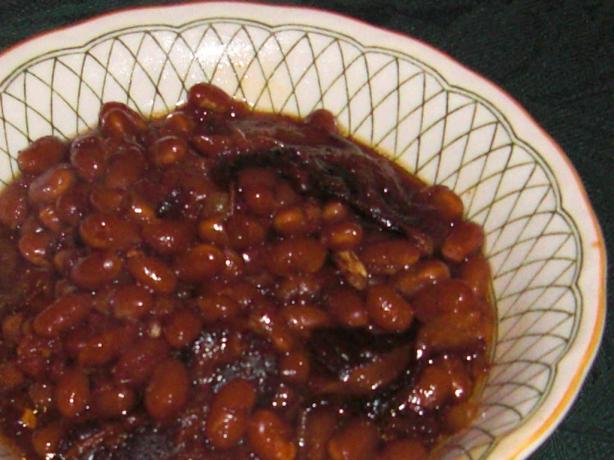
“Ugh,” “Ick,” and “Eww,” Nana's grandchildren responded when she told them how her family survived on wormy beans one hard Minnesota winter when she was a child. Nana smacked her lips, "Yum! Protein!"  I wasn’t so shocked. After all, didn’t they normally eat weird things like pickled pigs feet, and pig brains (that went by the name of headcheese?) I’d even heard that they, as well as my own family, ate rattlesnakes!

Little did I know at the time that wormy beans would play such a big part in the middle-grade novel I would someday write. “The Wormy Bean Winter," is based on real-life events of my Finnish American family. Though, as my husband Richard likes to point out,  it was his side of the family who actually ate the wormy beans!

In a card promoting my manuscript, I included the synopsis, “Kata didn’t realize that something as tiny as a wormy bean could be the difference between disaster and survival. While homesteading on the South Dakota prairie during the harsh winter of 1919, her family was barely surviving on their last bag of beans. When they discovered they were eating beans infested with worms, Pappa went to work in a copper mine leaving 12-year-old Kata in charge of the outdoor chores in the bitter cold. What was worse was that Papa’s confidence in Kate was bean-sized, too. She had to prove her sisu, the Finnish word for guts and determination, while she faced challenges like her baby sister’s ear nearly freezing off, vicious old “Three-Toes” the wolf, and all her sisters’ refusal to eat the wormy beans even if it meant starvation!”

I loved writing the book and coming to know more about my family. And I am so thankful for the humor, sisu and faith that both our families had when they helped settle this wild and wondrous country.  

Monday, August 22, 2011

Our "Little House on the Prairie" Dresses


Jana Segal

While my mom devoured the Little House books, I was more into the TV series. As a child, I remember being glued to the TV to watch Half-pint (Laura), Mary, Ma and Pa on Little House on the Prairie every week. My pre-adolescent heart beat a little faster when curly haired Michael Landon flashed that gorgeous smirk of his. My annoying father would walk in front of the TV flicking his tongue distastefully, “Bluck. Bluck.” But that show meant a lot to me. I always wanted to be an actress and child star Melissa Gilbert gave me hope with her two front teeth slightly protruding. In addition to our matching smiles, I resembled her in other ways - especially that button nose. (Imagine my dismay when my childhood doppelganger had her nose and teeth fixed.)

A popular show in the 70s, Little House on the Prairie had an impact on the fashions of the time. I remember all the girls at church wearing long, maxi dresses. In our family there was very little money to buy new cloths. Mostly we wore hand-me-downs and thrift shop finds (way before it was trendy.) I remember one of the few times we got something new. Dad had gotten free tickets to the fair. I don't know what possessed him, but he bought all five of us girls - mom included - matching pink and white gingham maxi dresses with bonnets. (One of us must have destroyed the Polaroid of the five of us from Mom, teenage me, preteen sis on down to the baby in our matching Little House on the Prairie dresses.) We had so few clothes so at any given time at least three of us had to wear the offending dresses to church on Sunday. Oh. Oh. Painful memory. In the church parking lot. Climbing out of the bed of the truck wearing my Little House maxi dress and tennis shoes.

Despite the embarrassing dresses, I was always loyal to the program. Growing up as the oldest daughter, I was a timid, overly obedient child. My one act of rebellion was standing up to my dad when he forbid me to watch my beloved Little House on the Prairie because it was too dramatic and “sappy.” I remember crying, “Mom! It is so unfair!” This was the most wholesome, Christian show on television!

It's funny how things come full circle. After I was grown and married, mom dug out one of the gingham dresses for my costume collection. When she and my nieces came to visit us, we dragged out my costume box and all dressed up 1880's style to visit the old West tourist town of Tombstone. One of my little nieces continued the family tradition by wearing the pink gingham dress and bonnet with her tennis shoes!

Tuesday, July 26, 2011

Weavings of Another Kind: Braided Pulla and Love.

by Lorna Kerin Beall

In Model T Biscuits Mama, Step-daddy and six-year-old Lorna head cross country in their Model T picking apples along the way to stretch their meager nest egg until they can find a little farm of their own. Mama shows her sisu, the Finnish word for guts, determination, and ingenuity, when she’s faced with no oven in the apple-picking camp. She surprises Lorna and Step-Daddy by baking biscuits on the engine (actually the flat head) of the Model T.

Earlier in the story, Step-Daddy recalls Mumu's baking. He rubs his belly and says, "That house always smelled of fresh bread." 
Lorna answers, "Know how we made it? Know how Mumu and I got the bread so skinny? And made the outside so crispy? We rolled the dough out flat. Then poke, poke, poke, we poked holes in it. Then we baked it smack-dab! - on the bottom of the oven. Mumu even let me..."

While I was writing Model T Biscuits, I tried to weave some Finnish customs and language into the story. One way I did this was by including traditional Finnish food. My mama, as well as my Finnish Mumu who raised me up until this point, loved to bake heino leipä: Finnish flat bread, pulla: Finnish cinnamon rolls, and other braided kinds of pullaMy Mumu’s little home in Buffalo, South Dakota, always smelled of fresh-baked pastry. And the kahvi pot was always on for neighbors or passers-by who were welcome to pop in. Tugging her little sled, my small cousin, Willo Boe and our Mumu delivered homemade bread to shut-ins and other friends. In my story, the family heads out West and Lorna frets that Mumu won’t be able to deliver bread without her, since the wheel on her wobbly little wagon is broken.

The smell of fresh baked goods brings back cherished memories of Mumu and Mama baking in our big black cast iron stove. All kinds of love was kneaded and braided into these Finnish delights.

Here are two recipes that I included in prologue of, “Model T Biscuits.”  


MODEL T DROP BISCUITS

(Kids, you’ll need your Mama’s or Mumu’s help.)

Start up the Model T engine. Let it warm up.

If you don’t have a Model T, heat oven to 450 degrees.

Model T directions: Grease tin cake pan
Bake covered.

Oven: Use a tin cake pan. Do not grease. Do not cover.

2 cups flour
l/2 tsp. salt
4 teaspoons baking powder
l/2 teaspoon cream of tartar
2 teaspoons sugar
l/2 cup of lard or shortening
¾ cup buttermilk (Used canned milk in the Picking Camp.)
Mix dry ingredients. Add the lard or shortening.
Then add milk. Stir gently till soft dough forms.

Model T: Drop by spoonfuls on a greased cake pan.

Oven: Drop by spoonfuls onto an ungreased cake pan..

Model T: Check frequently.

Oven: Bake for seven to nine minutes.

*Or buy canned biscuit dough from the supermarket.
Make and bake according to directions on the package.

Serve the biscuits hot with butter and honey.

IF POSSIBLE LOOK AT SUNRISE WHILE EATING.

MUMU’S THIN BREAD

(Kids, you’ll need Mama or Mumu’s help!)

l package or cake of yeast
l/4 cup lukewarm water
2 cups lukewarm milk
3 tablespoons sugar
l l/2 teaspoon salt
2 tablespoons shortening
6 cups flour

Dissolve yeast in lukewarm water. Mix milk, sugar and half of
flour into the yeast mixture. Melt shortening and pour over the mixture.
Add the salt and the rest of the flour a little at a time kneading in to make a stiff dough.
Turn out onto a floured board. Knead again.

Flatten out dough with a rolling pin (roll-roll-roll) to about
l l/2 inch thickness. Punch holes with a fork (poke-poke-poke.)
And brush with milk.
Let rise only a short time.
Bake on greased cookie sheet at 425 degree oven about 30 to 40 minutes.

*Or buy frozen dough from store. Thaw. Put on floured board. Flatten with a rolling pin to about 1& ½ inches.
Punch holes with fork. And brush with milk.
Let rise only a short time.
Bake on greased cookie sheet at 425 degree oven 30 to 40 minutes.

 EAT THE THIN BREAD WITH YOUR LOVING FAMILY!
IN YOUR OMA TUPA! (YOUR OWN HOME.)

Tuesday, July 5, 2011

How I Came to Write "Model T Biscuits"


Lorna Kerin Beall

    I have a very poignant memory of one Sunday when I was 6-years-old. Recalling this incident is what inspired me to begin writing Model T Biscuits. Remembering the experience makes me feel like I am that little girl again.

    I was attending the Cave Hills Lutheran Church, near Buffalo, South Dakota, with my Mumu (my Finnish Grandma.) I clung to Mumu’s hand. Though all the folks, who seemed very big and old to me, were friendly, I had a lonesome feeling way down in my tummy. I missed my freckly, redheaded Mama. Unable to find work close by, she was away working in the big city of Chicago as a governess. I had trouble saying the word “governess,” and Mama had told me I could say, “nanny.” She sent me a postcard with lots of tall skinny buildings on it. They looked scary. But the XOXO’s she scribbled on the other side of the scary postcard made me feel all better.

    One time when she was home for a visit, she showed me a picture of the boy and girl she took care of, Charles and Jacqueline. They were standing as pretty-as-you-please in front of a big mansion. “Is that our house, Mama?” I’d asked. She shook her head, and reassured me that someday we’d have our oma tupa, our own home. I tried very hard to pronounce the girls name. “Jac – Jac…” Mama told me I could call the little rich girl Jackie. Jackie was dressed in a frilly white dress that was prettier than any I owned. And Charles had a white shirt and shorts on. Also suspenders. I wished I knew what color those suspenders were. Everything in the photograph was black and white. Even Mama’s red hair. She was in the picture, too, holding onto the children’s hands. I didn’t like that. She was my Mama.

    I knew my Mumu loved me. Our little stucco house always smelled for homemade thin bread. She called it a big Finnish word I couldn’t say, something -- leapa. Only she spelled that last part “l-e-i-p-ä.” Mumu and my Aunts loved to chatter away in those hard words that I couldn’t understand. I don’t think they wanted me know what they were saying. From the funny looks on their faces I knew they were telling secrets.

     Mama married my Step-Daddy, and they came to see us. They said they were going to Wash-ing-ton, State, to see his sister, Sill. They promised to take me too. But I didn’t believe them.  I always raised a big noisy fuss when Mama had to go back to Chicago after a trip home, so she’d sneak off in the middle of the night. I was afraid they’d sneak off without me.  So I hid away in he back seat of our
Model T.

    And that’s where and when Model T Biscuits begins.

Monday, July 4, 2011

Family and Family Heritage Inspire Writing


by Lorna Kerin Beall

Who would think that a little girl raised in a tiny farm house with only two books to her name, (“Heidi” and “Cherry Ames, Student Nurse”) would develop a life long love of reading and writing. I have been writing for over 50 years, publishing articles and short story manuscripts in magazines such as Guideposts. One was reprinted in a Hallmark book. These minor early successes encouraged me to persevere and develop my distinctive voice. During this time I was also progressing to children’s picture book manuscripts. Having raised six children and taught Sunday school for disabled children, I saw a need for more books that dealt with children's issues. So I wrote books that centered both on light-hearted issues, such as discovering the simple treasures in life, and more serious issues such as child abuse. Wanting to communicate to children, I volunteered to read my picture books in my own children’s classrooms. It meant so much when I saw the flicker in the kids’ eyes.

About 20 years ago, I attended my first SCBWI conference. Seeing all those people writing children's books opened up a whole new world to me. Since then I’ve completed quite a body of work, writing both picture books and children’s novel manuscripts. My middle-grade novel, “Model T Biscuits” is very dear to my heart because it is inspired by my experience of being reunited with my mother in 1948 after being raised for my first six years by my Finnish Mumu (Grandmother) in Buffalo, South Dakota. This became a family project when my oldest daughter, Jana Segal, worked with me on the screenplay adaptation further carrying on our family heritage. Our script won first place in the Santa Clarita International Family Film Festival as well as the Moondance International Film Festival short screenplay contests. At Santa Clarita, we had the pleasure of seeing our script read by actors from the Dee Wallace acting studio.

Some years back, I attended a family reunion in South Dakota and heard stories of how my Finnish grandparents survived the harsh prairie winters in their homestead shack. They really had what we Finns call sisu or guts and determination. These family stories inspired my historical fiction, middle-grade novel, “Wormy Bean Winter.” This past year, I was honored with a Missouri SCBWI mentorship to work on “Wormy Bean Winter” with children’s author, Leslie J. Wyatt. That experience was incredibly rewarding, and I know that my manuscript is much stronger thanks to Leslie.

I am grateful for my small town upbringing in Buffalo, South Dakota and Prosser, Washington that taught me the value of family and heritage that influences my writing today.