Wednesday, September 21, 2011

A Celebration of My Creative Mind (or Overcoming Writers' Block)

fast writing sample. Notice messy writing in the columns.
items crossed out weren't edited, but checked off because I used them in story.

Jana Segal

After getting some good feedback from the Scriptwriter’s Network, I was anxious, no, excited to begin rewriting my modern day Tombstone comedy, “Behind the OK Corral.” And I was motivated! A potential manager would be reading my revised script soon! Then life happened. My mom came to visit and we started this blog to promote our writing. I attended to two baby showers and a wedding in Missouri. I get home, all rarin' to write and....my husband asks for a divorce. Five days later he loses his job. So I've got all kinds of thoughts going through my head... How is this gonna affect our boys? How am I going to get a job after being out of the workplace for 25 years? In a single day I had every emotion in the book rushing through my body – panic, anger, loneliness, sadness, fear, relief, and anger. After the initial shock wore off, I put together a resume and went on my first job interview. I tried to be kind to myself and give myself time to grieve the loss of the marriage. But what I really wanted to do was write. And I was angry that I couldn't. But to write, you have to use your brain and mine was just a little preoccupied at the moment. When things finally settled down, I sat down pen in hand. I came up with nothing, nada. My brain was blank. But I was determined. I read over the notes from Scriptwriter's Network. Great advice. Nothing. I reread my writer's notebook. Nothing. I scribbled in my notebook. Still nothing. I was officially in a writers block.

Let me define what I consider writer's block. It is when I can't for the life of me figure out what to write or I'm stuck on how to solve some story problem. My mind has gone blank for a period of time. Articles have been written on how to overcome writer's block. One suggestion is to get some distance from the problem by going for a walk, painting a picture, or planting a garden. Just relax and the answer will come to you while you're taking a shower or washing dishes. This generally happens when you have already been mulling over your story for awhile. There was a seed of an idea. Sometimes inspiration comes BANG from something you read or see on the news. When this happens, be thankful and, for Pete's sake, write! It is a gift from God.

I believe that usually you need to plant the seed before inspiration will grow. That is why writing is work. Sometimes you have to force yourself to write something on that blank page. It is easier to keep writing if you have already been writing (the rock in motion theory), so it is important to develop a writing habit. Writing on a regular schedule (whether once a day or once a week) tells your subconscious that you're serious about writing. This is the cool part - your subconscious will actually continue to write even when you aren't consciously working on it. When things are really stewing in my subconscious, the ideas just flow. I feel a certain euphoria that resembles being in love. I call this being in a “writing mood.” It is one reason I write.

But how do you plant the seed? One trick I use is to write a question down in my notebook which I fully expect my subconscious to work on. (It is also helpful to do this right before you go to bed especially on the evening before you start a new project.) Then just write. Write anything. Don't edit. Just crap on the page. This part of the process should be messy. That's all right. There's even a name for it. It's called “fast writing” (from the excellent book, “Writing Down the Bones.”) Have faith. The ideas will come. It is all in you. You just need to let go and write. The important thing is not to edit – that blocks the creative mind. Just resign yourself – the first draft will be crap. Think of it as the discovery draft. You just want to release it from your head and onto the page. There will be plenty of time to sort it out and edit later when you rewrite. And you will rewrite.

Speaking of rewriting, lets get back to my recent writer's block. It was the result of interrupting my writing schedule which made it a struggle to get my head back into the story. But even with some monumental distractions, I overcame my block by using the techniques above and having faith that the answers would come when they were ready. And they did.

Now back to my screenwriting... :)

Wednesday, September 14, 2011

The Mended Valentine


by Lorna Kerin Beall

Years ago I had a beautiful blue willow platter that I treasured hanging on my dining room wall. One day when I was gone, my two younger daughters chased each other around the table, and knocked the platter down, shattering it. Filled with remorse, they found each miniscule piece and glued it back together again. I promptly hung it up again. My oldest daughter, Jana, pointed out something I already knew. The platter was ugly. But I persisted in leaving it up for years. Finally, in an act of love, Jana replaced it. I took the broken platter down, and proudly hung the new one. But I still cherish the remembrance of how my younger daughters so lovingly mended the other. That incident and something a friend told me about an experience of hers inspired this little piece.

The Mended Valentine

When my friend’s lovely home burned,
with all its fancy furnishings and fine collectibles,
she said the thing she regretted losing the most
was a torn and taped-together valentine.

Her grown son had made it when he was just 6 years old.
She’d been canning that day long ago,
and was tightening the lid on her last jar of peaches,
as her boy labored to get both sides even on a valentine.
His little tongue was stuck out in concentration,
as he drew and smudged and erased, again and again.
She tried to help, but was pushed politely away.

“Must be for that little red-headed girl he likes,
the one who lives in the brown house down the street,”
she told herself, as she continued her tiresome canning job.
She sighed. The steam from the kettle, the 100 degree heat,
and the blazing wood stove were wearing her down.

With great effort, she hoisted the last rack of filled mason jars
from the giant pot that was boiling and splattering on the stove.
In the hot sun streaming through the kitchen windows
the peaches in the glass jars looked like gold.
But they felt more like lead.
She fanned herself with her wilted apron.

Her son chose that moment to hand her his creation.
“For me?” she asked, taking it, but then setting it down,
as she pushed the kettle to a cooler spot on the stove.
When she turned back she saw that her teary-eyed son
Had snatched it up, and was ripping it to bits.

She tried to hug him, but he pulled away, and ran from the room.
She got down on her knees and picked up each tiny piece.
She put the valentine back together with tape, tears and love,
And after she showed it to him, she placed it with all of her other treasures, in an old cedar chest.

My friend had saved the valentine all those many years.
Occasionally when the chest was opened,
her tall and bearded son would pick up the valentine,
admonishing her for keeping the silly old thing.
And sometimes, his face as red as the valentine he’d made,
he’d even admit that he was glad she had.

And though the mended valentine is long gone,
along with the polished keepsake chest that held it,
I know it remains secure and cherished in both their hearts.

Sunday, September 11, 2011

My Storytelling Journey


Jana Segal

I started attending Tucson's Teller of Tale's storytelling meetings three years ago. As a part of each meeting we would go around the room introducing ourselves. Every time I would say, “I'm here to enjoy the stories and hopefully get inspired to do a story some day.” This went on for years, until one day... they stopped having introductions.

It had been so long since I had been in a play - since before the kids were born. But I finally got that ol' itch to perform again. So when master storyteller Glenda Bonin offered a storytelling workshop, I dug out my one-woman “storytelling” musical, Magic Shoes, polished it up, and e-mailed it to her. Knowing my theater background, Glenda cautioned me about trying to act. Storytellers TELL their stories off the top of their heads. Enchanted by the story, she agreed to let me read (and sing) it at the storytelling workshop anyway. With all the carefully crafted description, we discovered that it was really more of a one-woman musical than a storytelling piece. I watched in awe as the other students actually told their stories – hoping to become inspired to do it too. Someday.

Someday came sooner than I expected when Glenda asked me if I wanted to work on a story for the professional studio recording of TOT members. While listening to other members practice, I finally got inspired! I remembered Sharlot Hall's 1880's Christmas story, “The Fruit of the Yucca Tree” that I had adapted for my short chick Western, Desert Angel. I was excited about revisiting that touching story. So I condensed it and revised it and started memorizing it (which I wasn't supposed to do) and got cold feet. I told Glenda I wouldn't be able to do it. It had been so long since I had even memorized a monologue.

Glenda gently encouraged me. She suggested that I read the story for the recording. And I sure hated to miss this opportunity to be recorded on a CD with professional storytellers! She made it so easy for me. I practiced it on my own. Then she timed my story as I read it over the phone. She said it was a lovey piece. I wasn't sure if I was ready, but thanks to Glenda's support and incredible patience, I got through it. I am proud to be on a professional storytellers' CD.

Since I was already practiced up, I volunteered to read the story for the Tombstone historians and enthusiasts at the Tombstone Territory Rendezvous. Unfortunately, some of us went dancing the night before and I must have been shouting over the music, because the next morning my voice was horse and barely audible. Afraid that no one would be able to hear me, I tried to arrange for a microphone - with no luck. When I got up to the podium, I found that I couldn't see the words on the page. I had to wear my new glasses. (Which also made me feel old since last time I was on stage I didn't need glasses.) A friend in the front row said that I looked nervous for a moment as I adjusted my glasses. The next thing I knew, it was over and the audience was applauding. Historian Casey Teffertiller graciously commented that I had a gift!

After that Glenda said it was time for me to do actual storytelling – not a reading, not a memorized monologue. She said I knew my story and I should just “tell it” at the annual TOT Christmas party. At Glenda's suggestion, I made an outline and tried to visualize the story. Lounging on our host's sofa, my fellow storytellers took turns telling their favorite Christmas stories. My story would fit in perfectly! I opted for more bean dip instead.


I discovered that I knew it better than I thought when the dialogue kept running through my head. So, after recovering from the shame of not performing, I agreed to do the storytelling performance to promote the Teller of Tales CD at Bookmans. I decided that it was alright to memorize the dialogue because of the distinct old timey dialect. It shouldn't be that hard because it was the same dialogue I knew from my short film. And I worked at paraphrasing the rest. I wasn't at all sure that I was ready for this. I was scared to death that I would forget a line and lose my place. But with my son Vlad there for support, I ran the story through in my head on the bus ride to Bookmans. Vlad helped me on with my 1880's apron and I went for it. There were sections I forgot, but in the grand tradition of theater, I kept going. And then it happened. I started telling it to the two little kids in the audience. (Vlad tells me the kids laughed.) I know their mom hung on every word! Then, just like that, it was over. Glenda asked if I wanted to do it again. Heck, no! I just got through it!

Tuesday, September 6, 2011

Delighting in Books

by Lorna Kerin Beall

When my daughter, Jana, was here we had a great time visiting the Laura Ingalls Wilder Museum in Mansfield, Missouri. It was a beautiful July day, surprisingly not too hot. We enjoyed the museum, the grounds, and touring both homes. Two of my favorite things were the buggy they traveled to Missouri in and Pa’s fiddle. I also love the paper dolls of Laura and her sisters that I bought in the gift shop for my granddaughter’s birthday.

As Jana and I looked at the books, I was intrigued once again by how both Laura and her daughter, Rose, were writers. (As Jana and I are.) I have always loved Laura’s Little House books (especially since I also write children's books.) I’d recently purchased a used copy of Rose’s Young Pioneers that I thoroughly enjoyed.

Both Laura’s and Rose’s books were exciting survival stories where the protagonists
faced all kinds of dangers and challenges. (Often on the prairie.) The Little House books had more description. (Something I don’t care for in other books.) But seeing things through young Laura’s eyes was different. I ate it up like my grandma’s Finnish pulla. (cinnamon rolls.) Perhaps this was due to the fact that when Laura’s sister, Mary, lost her vision, young Laura became her eyes, describing everything for her. This enabled Laura to see everything in a new and fresh way. Sometimes with wonder and delight. And sometimes with dismay and hurt. This came through in Laura Ingalls Wilder’s writing.

Though Laura and her family overcome all sorts of challenges and problems in the Little House books, and there’s plenty of plot, I feel the books are definitely character-driven. I feel I know spunky little Laura who got all excited over a tin cup, a stick of candy and a penny for Christmas. 

Thursday, September 1, 2011

"The Help" - Some Traditions are Meant to be Broken

There are some wonderful films that give you a taste of the Southern traditions - “Steel Magnolias” and “Fried Green Tomatoes” being among my favorites. But some traditions are meant to be broken. “The Help,” set in 1960s Jackson, Mississippi, is the first film to deal with the shared delusion that blacks and whites are separate in the South. Despite the Jim Crow laws designed to keep them apart, their lives have been intertwined since the days of slavery. Generations of white children have been raised by their black “maids.”

When the president of her bridge club drafts up a petition for a law forcing people to have separate bathrooms for their black servants, housekeeping columnist Skitter decides to draft something that will make a difference – a book on “the help's” perspective. The problem is that it's the dawn of the civil rights movement when blacks are still being lynched outside their homes. The maids could lose more than their jobs. It is inspiring to watch these women stand up for what's right despite their fears. Change starts with one act of courage.

Movie blessings!
Jana Segal

Check out my complete review at:  www.reelinspiration.blogspot.com

Tuesday, August 30, 2011

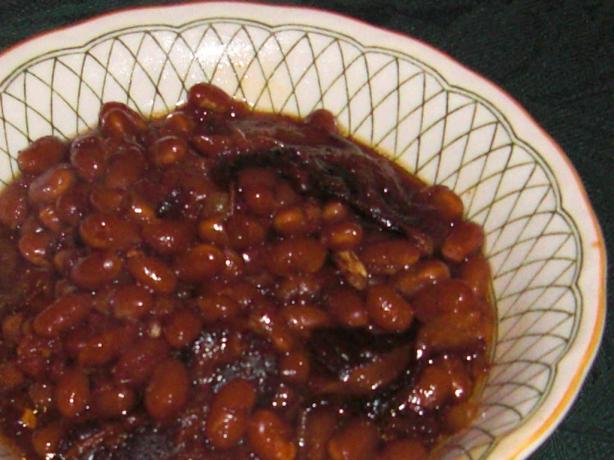
Servin' up Wormy Beans with Sisu


 by Lorna Kerin Beall

“Ugh,” “Ick,” and “Eww,” Nana's grandchildren responded when she told them how her family survived on wormy beans one hard Minnesota winter when she was a child. Nana smacked her lips, "Yum! Protein!"  I wasn’t so shocked. After all, didn’t they normally eat weird things like pickled pigs feet, and pig brains (that went by the name of headcheese?) I’d even heard that they, as well as my own family, ate rattlesnakes!

Little did I know at the time that wormy beans would play such a big part in the middle-grade novel I would someday write. “The Wormy Bean Winter," is based on real-life events of my Finnish American family. Though, as my husband Richard likes to point out,  it was his side of the family who actually ate the wormy beans!

In a card promoting my manuscript, I included the synopsis, “Kata didn’t realize that something as tiny as a wormy bean could be the difference between disaster and survival. While homesteading on the South Dakota prairie during the harsh winter of 1919, her family was barely surviving on their last bag of beans. When they discovered they were eating beans infested with worms, Pappa went to work in a copper mine leaving 12-year-old Kata in charge of the outdoor chores in the bitter cold. What was worse was that Papa’s confidence in Kate was bean-sized, too. She had to prove her sisu, the Finnish word for guts and determination, while she faced challenges like her baby sister’s ear nearly freezing off, vicious old “Three-Toes” the wolf, and all her sisters’ refusal to eat the wormy beans even if it meant starvation!”

I loved writing the book and coming to know more about my family. And I am so thankful for the humor, sisu and faith that both our families had when they helped settle this wild and wondrous country.  

Monday, August 22, 2011

Our "Little House on the Prairie" Dresses


Jana Segal

While my mom devoured the Little House books, I was more into the TV series. As a child, I remember being glued to the TV to watch Half-pint (Laura), Mary, Ma and Pa on Little House on the Prairie every week. My pre-adolescent heart beat a little faster when curly haired Michael Landon flashed that gorgeous smirk of his. My annoying father would walk in front of the TV flicking his tongue distastefully, “Bluck. Bluck.” But that show meant a lot to me. I always wanted to be an actress and child star Melissa Gilbert gave me hope with her two front teeth slightly protruding. In addition to our matching smiles, I resembled her in other ways - especially that button nose. (Imagine my dismay when my childhood doppelganger had her nose and teeth fixed.)

A popular show in the 70s, Little House on the Prairie had an impact on the fashions of the time. I remember all the girls at church wearing long, maxi dresses. In our family there was very little money to buy new cloths. Mostly we wore hand-me-downs and thrift shop finds (way before it was trendy.) I remember one of the few times we got something new. Dad had gotten free tickets to the fair. I don't know what possessed him, but he bought all five of us girls - mom included - matching pink and white gingham maxi dresses with bonnets. (One of us must have destroyed the Polaroid of the five of us from Mom, teenage me, preteen sis on down to the baby in our matching Little House on the Prairie dresses.) We had so few clothes so at any given time at least three of us had to wear the offending dresses to church on Sunday. Oh. Oh. Painful memory. In the church parking lot. Climbing out of the bed of the truck wearing my Little House maxi dress and tennis shoes.

Despite the embarrassing dresses, I was always loyal to the program. Growing up as the oldest daughter, I was a timid, overly obedient child. My one act of rebellion was standing up to my dad when he forbid me to watch my beloved Little House on the Prairie because it was too dramatic and “sappy.” I remember crying, “Mom! It is so unfair!” This was the most wholesome, Christian show on television!

It's funny how things come full circle. After I was grown and married, mom dug out one of the gingham dresses for my costume collection. When she and my nieces came to visit us, we dragged out my costume box and all dressed up 1880's style to visit the old West tourist town of Tombstone. One of my little nieces continued the family tradition by wearing the pink gingham dress and bonnet with her tennis shoes!

Thursday, August 18, 2011

Inspirational Visit to Laura Ingalls Wilder's Rocky Ridge Farmhouse


Jana Segal

While visiting my mom in Missouri, we took a self-guided tour of Laura Ingalls Wilder's Rocky Ridge Farmhouse in Mansfield where Laura wrote the beloved Little House books. What a lovely day!  The introduction included a charming documentary featuring a recording of the elderly Laura making a speech about how everything that she wrote about really happened to her. 

While touring the museum, I was struck by the similarities between the mother-daughter relationship of Rose Wilder and Laura Ingalls Wilder and my own relationship with my mother. The first thing I noticed was that mother and daughter were both writers - just as we are. Laura's daughter Rose was a successful writer and editor for the San Francisco Bulletin when she encouraged her mother to jot down her stories. Rose used that expertise to give her mom feedback on her work - just as I gave mom feedback on her children's manuscript. It was encouraging to read that Laura's first book, "Little House in the Big Woods" wasn't published until she was a senior citizen in 1932.  (See, mom, there's hope for you yet!) Inspired by her mom's stories, Rose went on to write, "The Young Pioneers." Likewise,  I was inspired to adapt my mom's family story, "Model T Biscuits" for the big screen. 

my 1880s writing desk

As Mom and I toured the farmhouse, I felt a kinship with Laura and her daughter Rose. Noticing all the pioneer mementos, I sensed that we shared a common nostalgia for South Dakota homesteading heritage. (Mom writes about her own family's South Dakota homesteading adventures in her book, "Wormy Bean Winter.") We spoke to one volunteer who used to be a teacher. She recalled how Laura liked to come to her classroom and read her books. My mom also loved to read her books in me and my siblings' childhood classrooms. 

I looked around and saw that we weren't the only ones who felt a special bond with Laura and Rose Wilder. There were people from all over the country (and other countries too) and even a Mennonite family who related to those cherished Little House books.

Laura Ingalls Wilder's Rocky Ridge Farmhouse museum site:

Video of the Rocky Ridge Farmhouse property


Wednesday, August 17, 2011

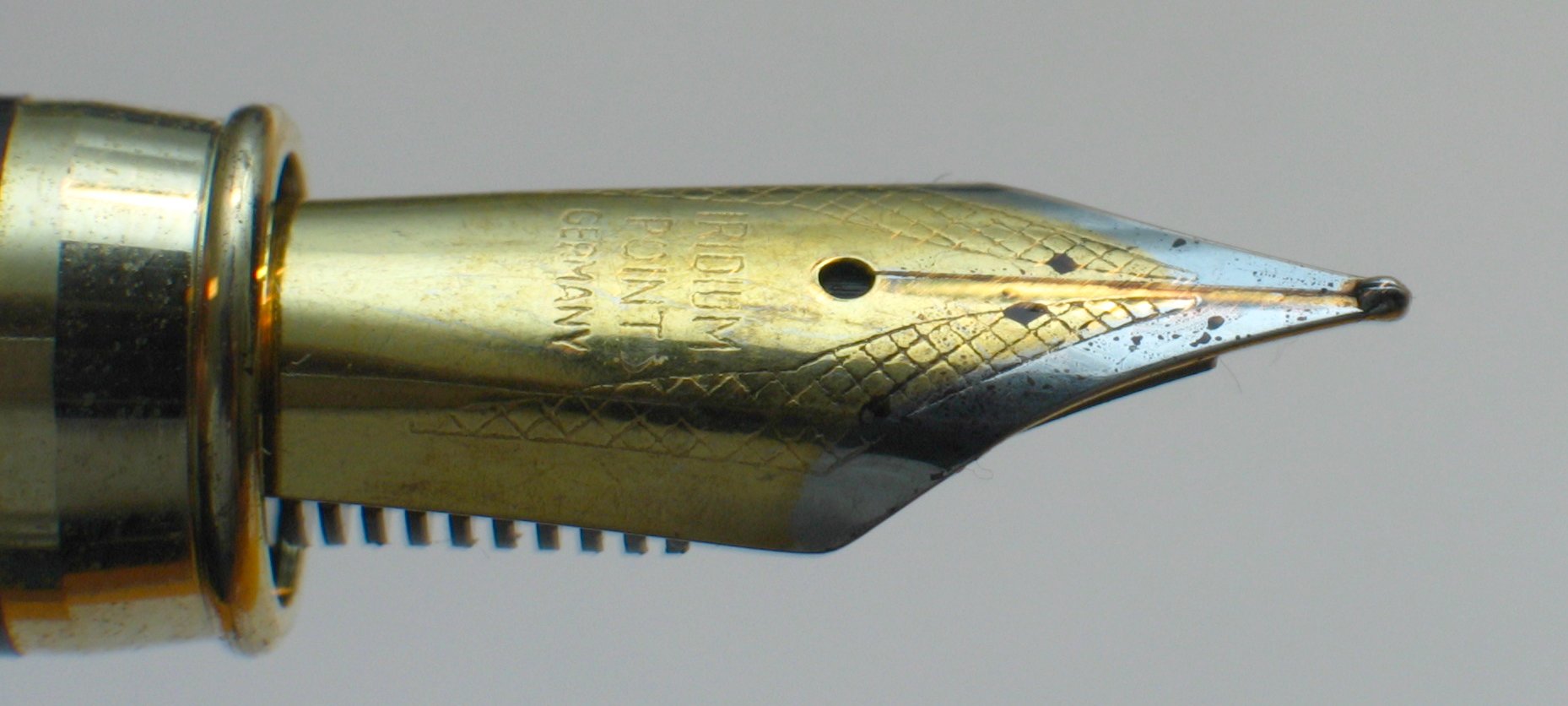
Fountain Pens and Other New-fangled Writing Tools


by Lorna Kerin Beall 

My daughter, Jana, had to drag me kicking and fighting like a roped calf into doing this blog. I also bellowed when my girls first suggested I use the computer instead of my typewriter. They said something like, "Mom you need to enter the 20th century. Using the computer makes writing so much easier." (Of course now I’m saving a ton of money on Wite-Out.)

In my defense, I remember being forced to use a fountain pen in penmanship class. As a fourth grader at Riverview Grade school in Prosser, Washington in l951 (or was it 1952?) having to use that fountain pen made me feel like I was a forced to use quill and ink. (Now I’d love that old-timey feeling, but back then it wasn’t a positive thing.) In fact, because of the inkwells, I was sure we students were still sitting at in the same ancient, dilapidated desks once used by pioneer children!

I had to dip and hold the tip of my pen in the ink bottle (which did not fit in the manufactured hole in th e desk) and pull a little gadget on the pen which filled it. Then I was free, not to create, but to practice my cursive over and over. This resulted in drips and mess and much blotting. I was assured this was the most modern way to write. (Now where have I heard that before?) 
                                                            
Fortunately, the next year my fifth grade teacher, whose birthday was the same day as mine, drove out a whole six miles to our little stucco farm house for a fried chicken dinner and homemade birthday cake. Besides a big dose of confidence, he gave me - marvel of all marvels - my very first ball point pen! Did he guess that this shy, freckled-faced ten-year-girl would one day be a writer?

So here I am blogging once again. Actually, I have to admit it is fun. And it’s especially rewarding because of those of you who read and/or respond to our blog so graciously.

Tuesday, August 2, 2011

Rag Dolls and Kewpies

by Lorna Kerin Beall


I recently attended an OWAIC Writing for Children conference in Springfield with two of my good friends. Though it wasn’t the main theme of the conference, the focus that I came home with was to "write from the heart."

I hadn’t planned to buy a book but keynote speaker Paula Morrow, the editor and publisher of Boxing Tree Books, put out copies of the book, Rose O’Neil, The Girl Who Loved to Draw, by Linda Brewster. (Rose O’Neil was the creator of the Kewpie Doll.) It’s a beautiful book with innumerable pictures illustrating Rose’s life as an artist by both Ms. O’Neil and author Ms. Brewster. It’s a feast for eyes and heart. And I loved how, in the early chapters, the author captured the child like wonder of little Rosie. 

But one reason I wanted this book was because it reminded me of the Kewpie doll that I got when I was four-years-old and living with my Finnish Mumu in the tiny town of Buffalo, South Dakota.

When I was six, my Mama married my Step-Daddy and we were about to head out West to find a new home. I wrapped Kewpie in tissue paper, and after a final kiss, put her in a Buster Brown shoe box and packed her with the rest of our things in the back seat. She traveled with us to an apple picking camp in Hood River, Oregon. I felt bad that Kewpie was missing the sights like the huge Hood River and Mount Hood. The mountain looked like my Grandpa with its white head and beard of snow. But I was happy that Kewpie was with us. At least I got to cuddle the Raggedy-Ann my Mumu had made. We’d tell Kewpie everything when we got to our brand new own home. (Our oma tupa.)
We loved our new stucco-covered home in Prosser, Washington even though Mama said it looked like a chicken coop and we had to use the outhouse at first. Snug in our oma tupa,  I gave both Kewpie and Raggedy Ann a goodnight kiss every single night. 

I still have my porcellin Kewpie though her “skin” is cracked and wrinkled much like my own. Sometimes it's good to unpack childhood toys and family heirlooms to see what precious memories they conjure up and what stories they inspire. I appreciate the sweet reminder I got to "write from the heart"  from the conference, Linda Brewster’s book, and memories of my beloved Kewpie Doll.